opens in a new tab

Humans + agents

I gave this as a short talk to our engineering team. These are the slides with some things that are working for us, in no particular order.

A year of agents

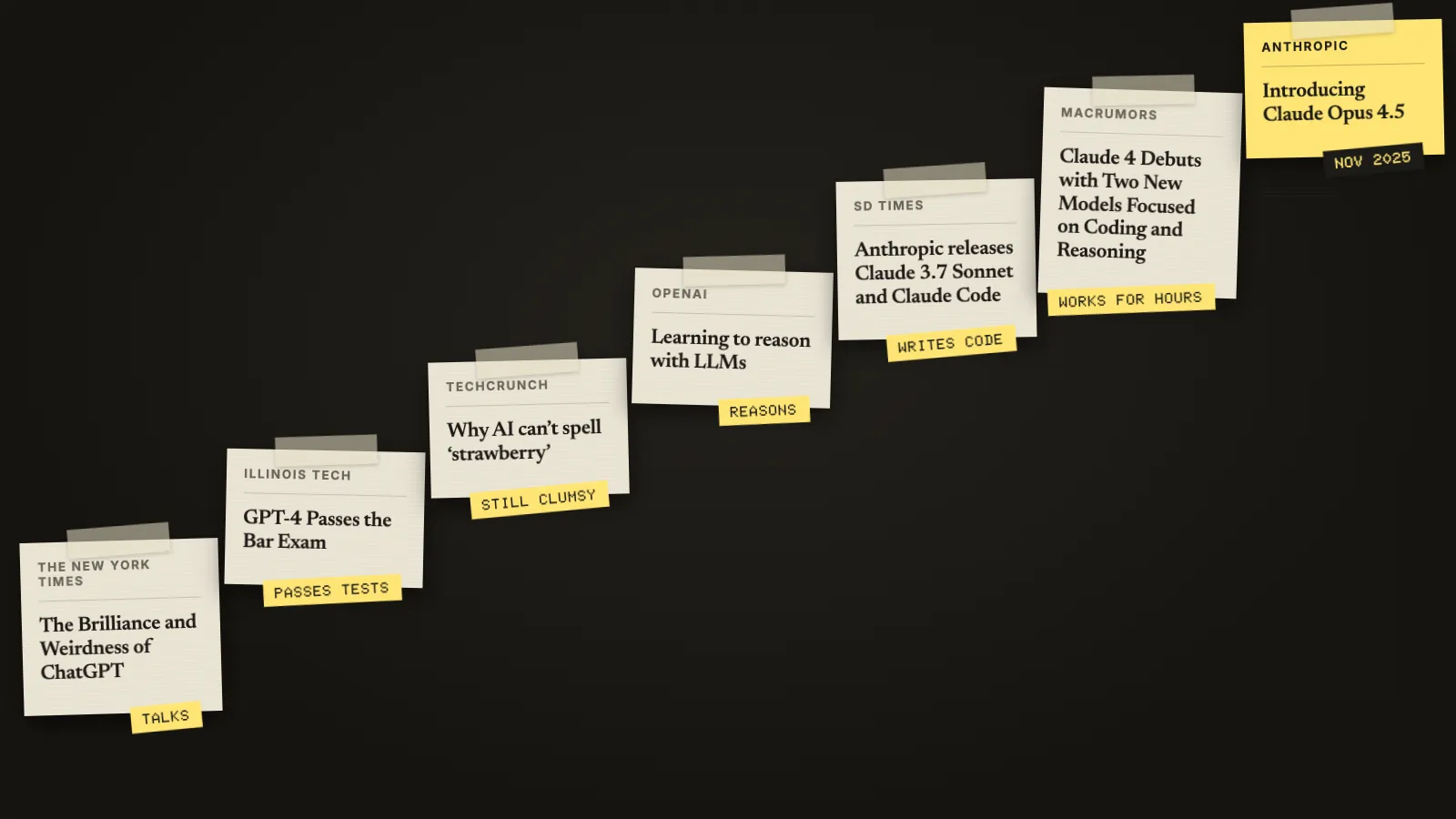
Newspaper clippings about AI taped up a wall, climbing from ChatGPT in 2022 to Claude Opus 4.5 in November 2025.
Three years of headlines about AI. Agents started really working in November 2025.
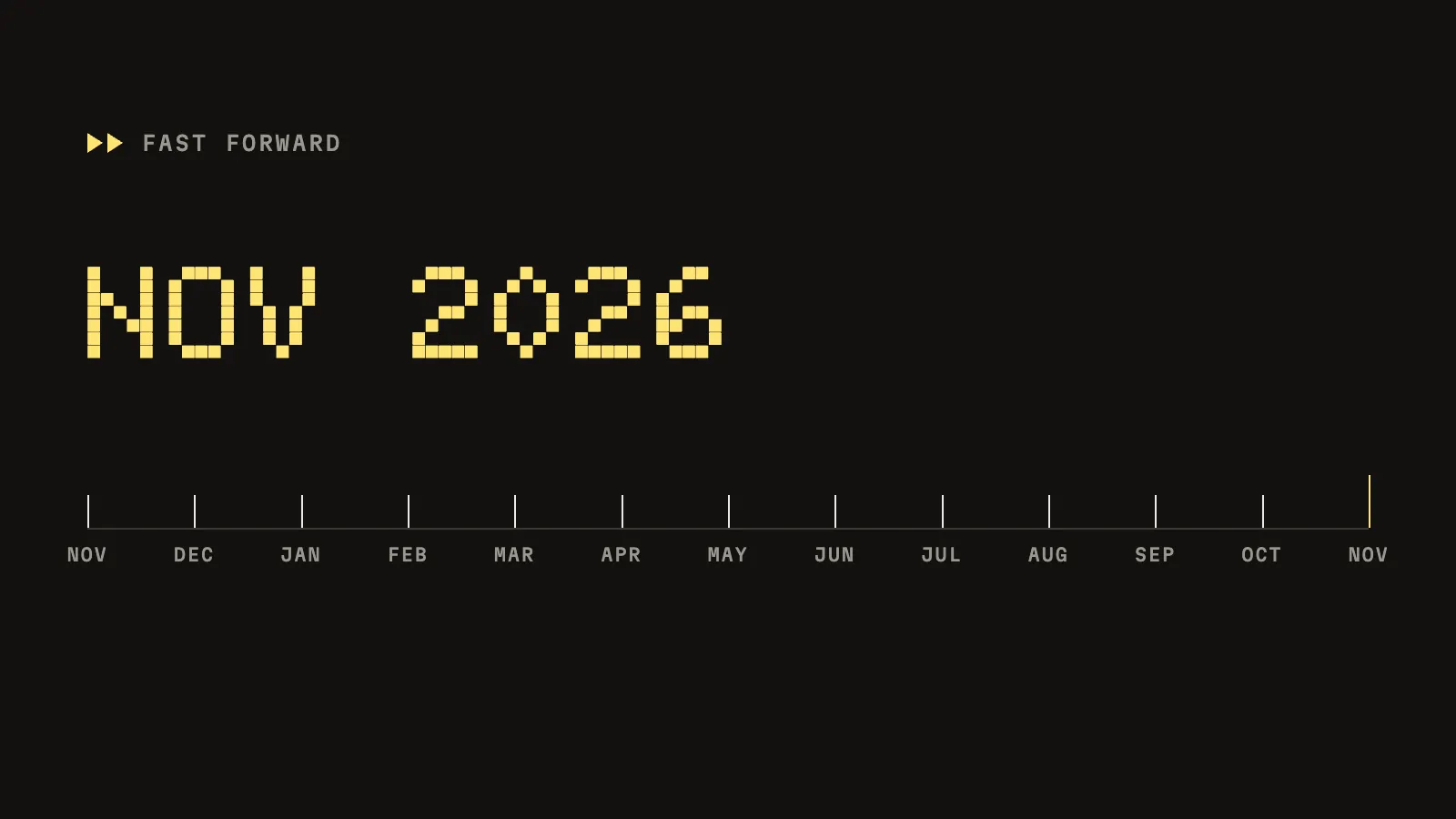
A month counter fast-forwarded from November 2025 to November 2026.
Then a year went by fast.
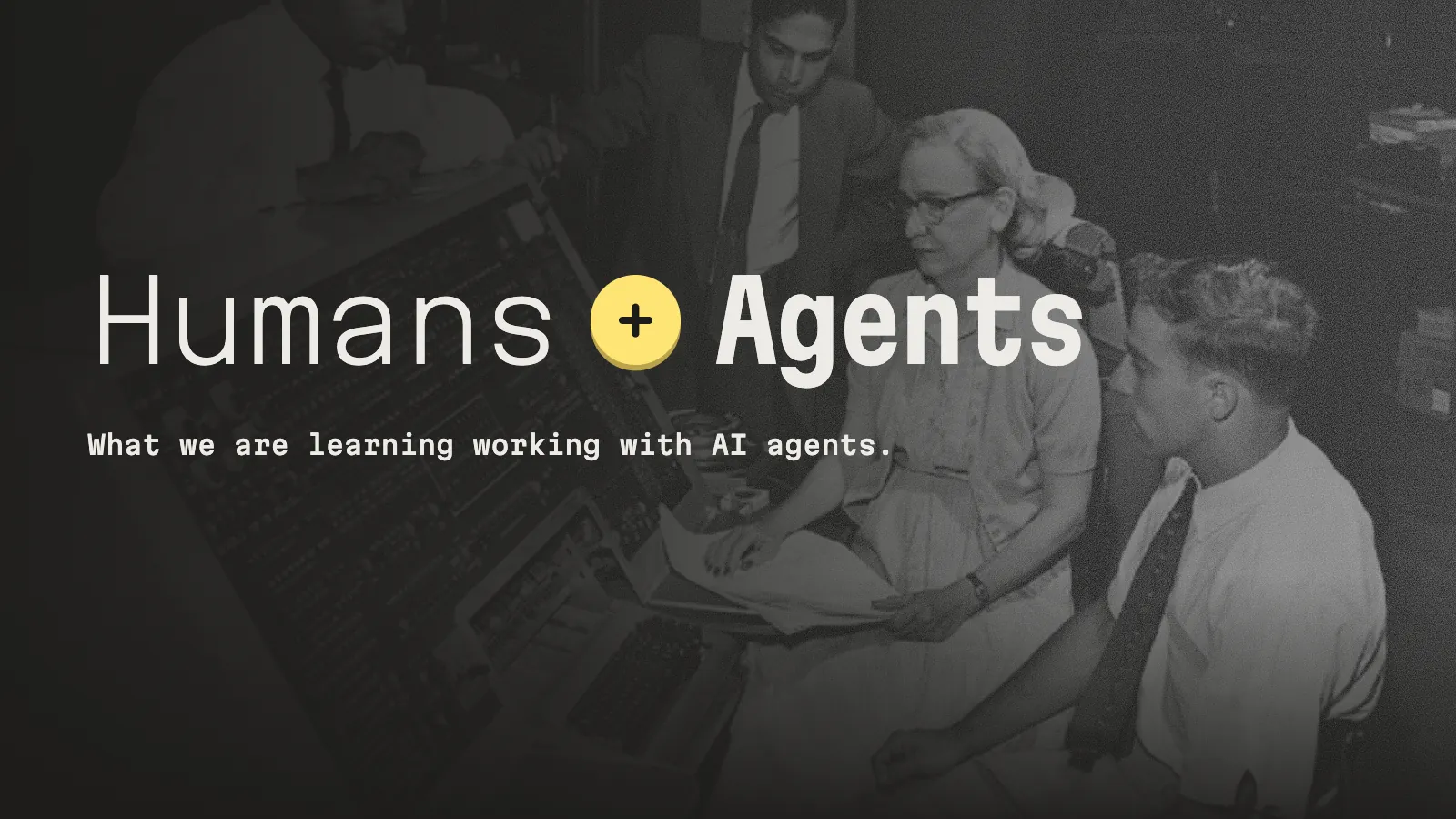
Title slide, Humans + Agents, over an archival photo of people at an early computer console.
What worked for our team, in no particular order.
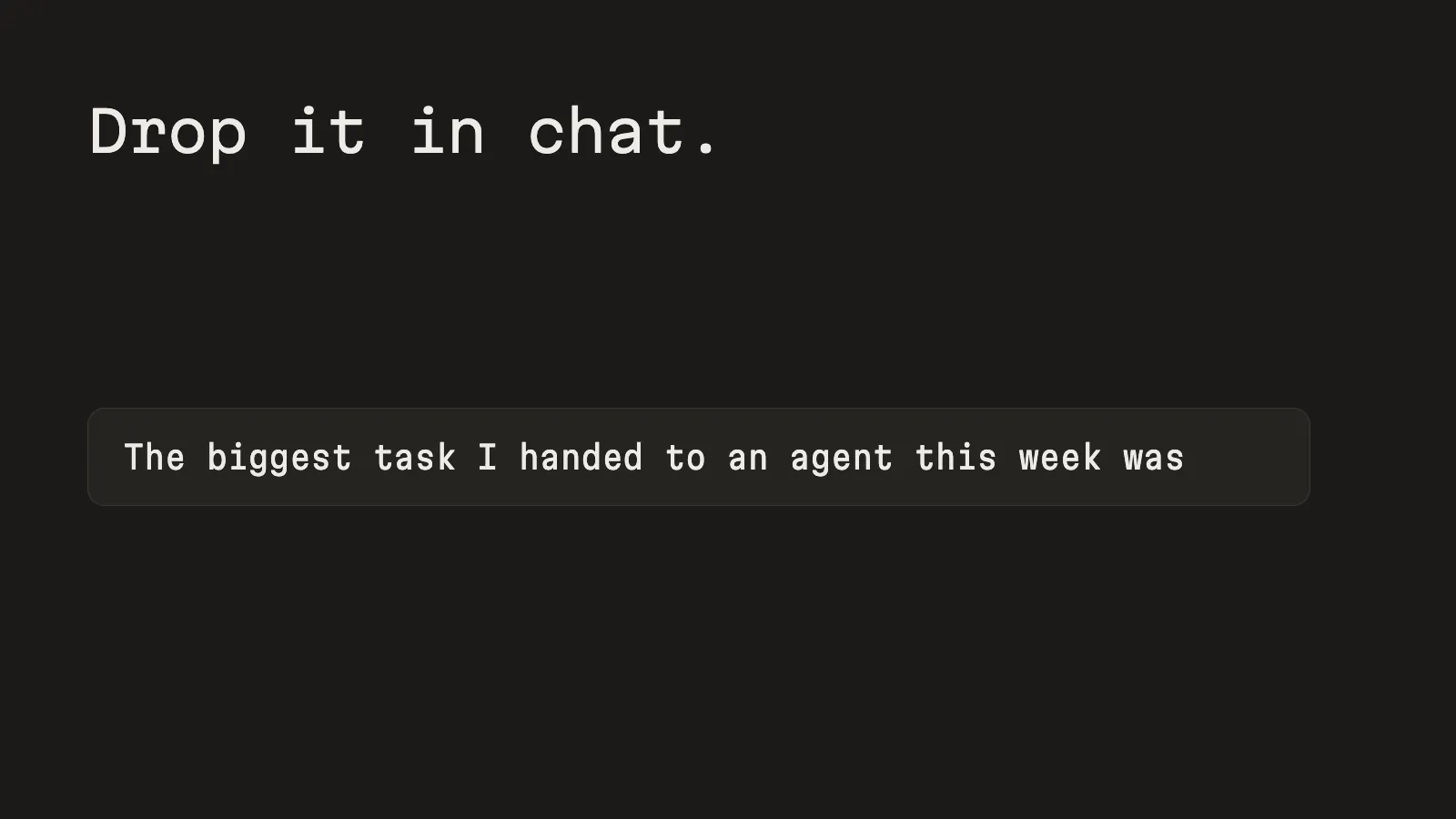
A chat box with the prompt: the biggest task I handed to an agent this week was.
Before you read on, think of the biggest task you gave an agent this week.
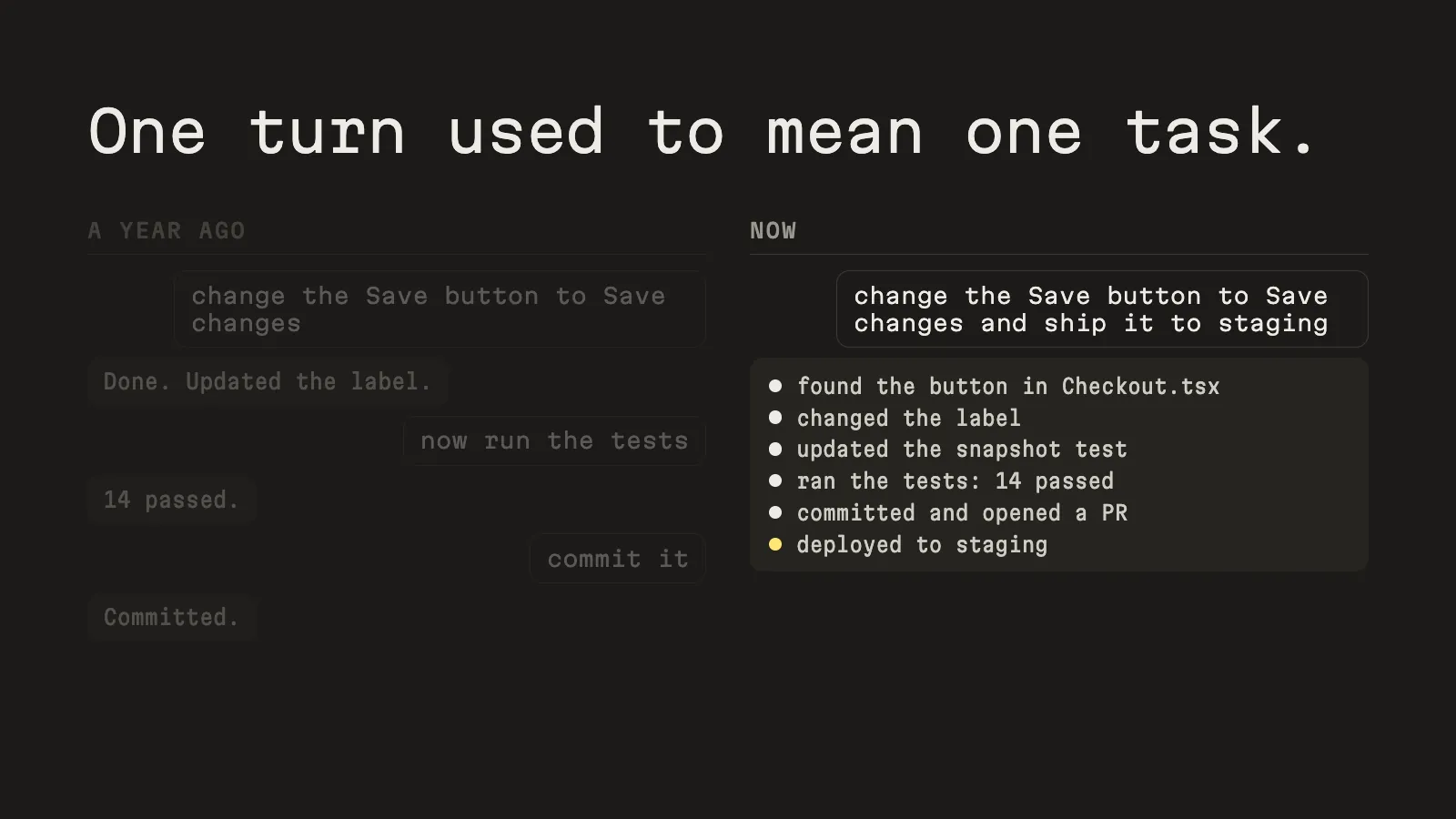
Two chat logs side by side. A year ago: three separate requests. Now: one request that finds the file, updates the test, opens a PR and deploys.
A year ago one small change took three turns. Now one turn takes it all the way to staging.
Fewer turns. Bigger tasks.
The whole year in two lines.

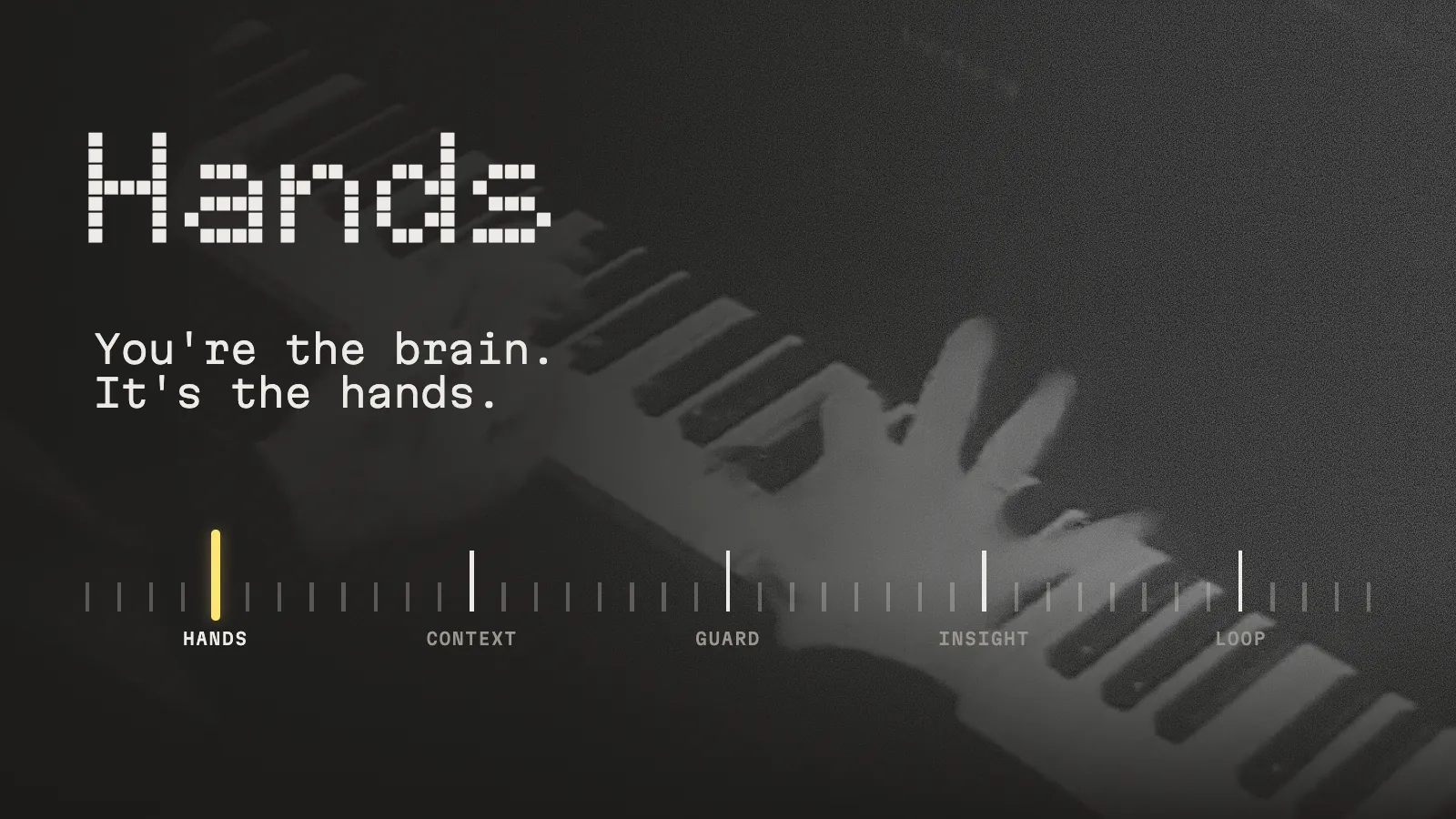
Hands

You’re the brain. It’s the hands.

Chapter opener: Hands, over archival footage of hands at a piano.
Chapter one. We decide, it does the work.
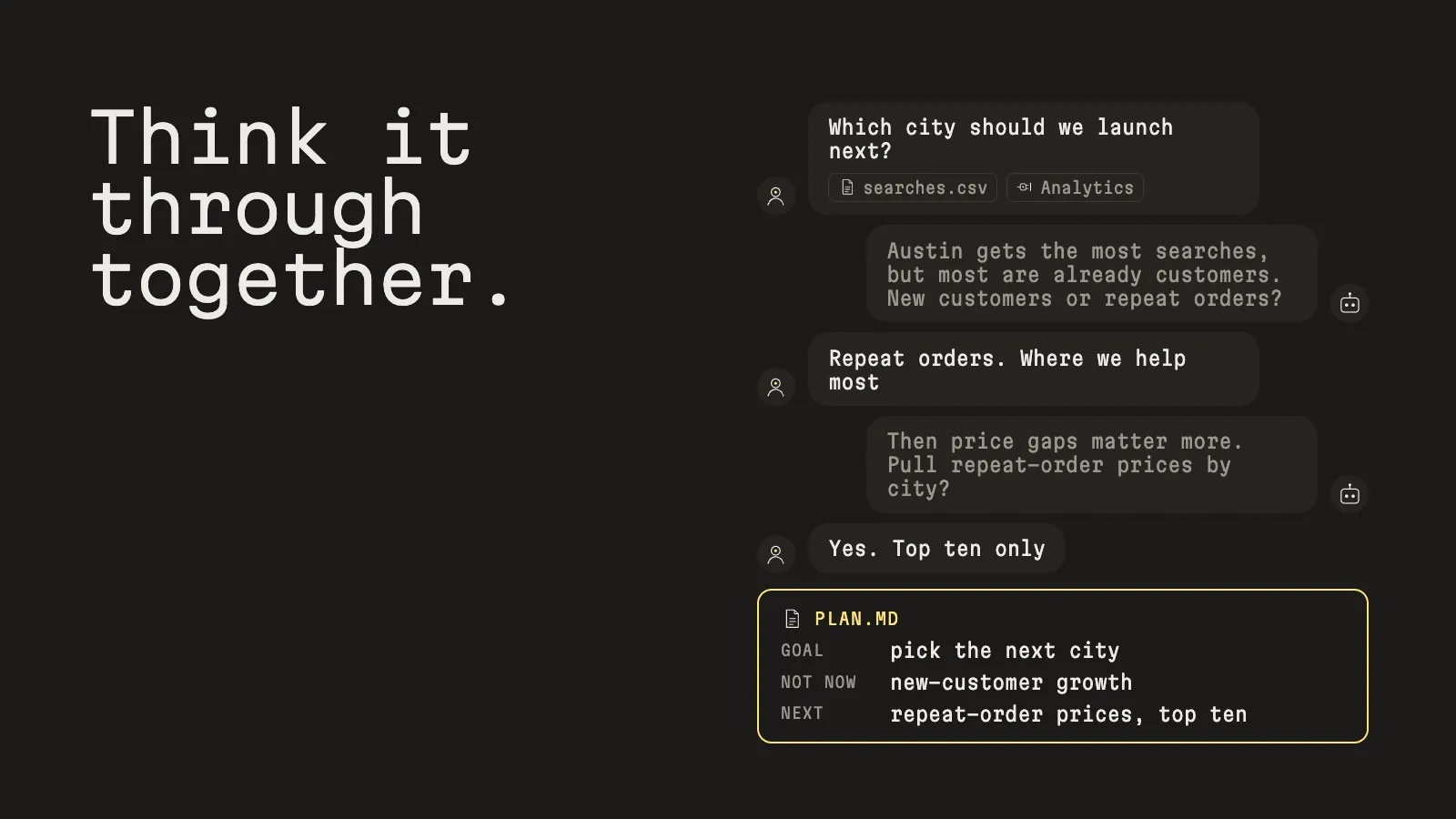
A chat where the agent asks clarifying questions about which city to launch next, ending in a short plan card.
Don’t one-shot it. Brainstorm like you would with a peer, and let it find the gaps before anything gets built.
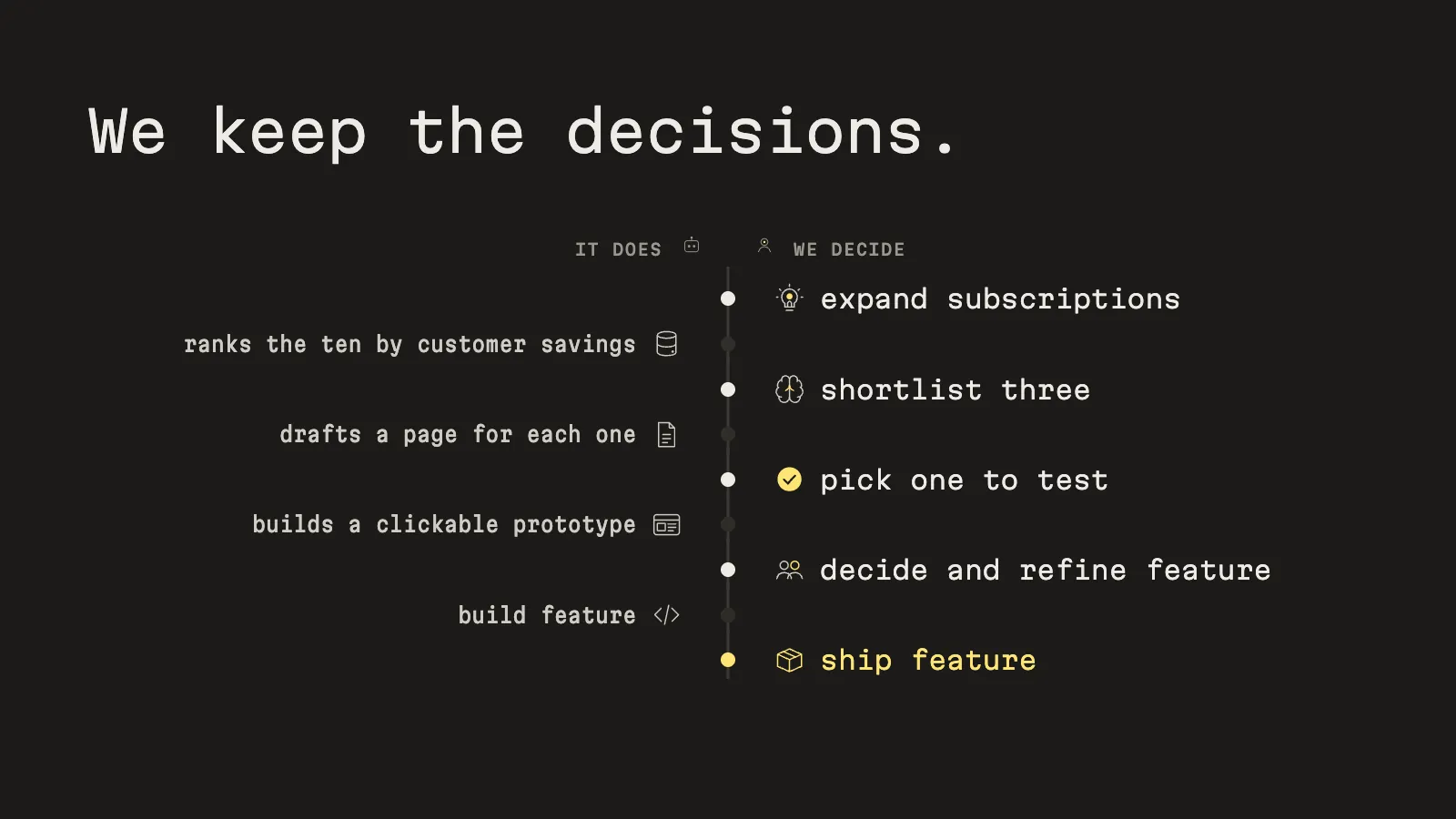
Two columns: what the agent does, such as ranking and prototyping, and the decisions we keep, from the goal to shipping.
It does the legwork. We make the call at every fork, including when to ship.
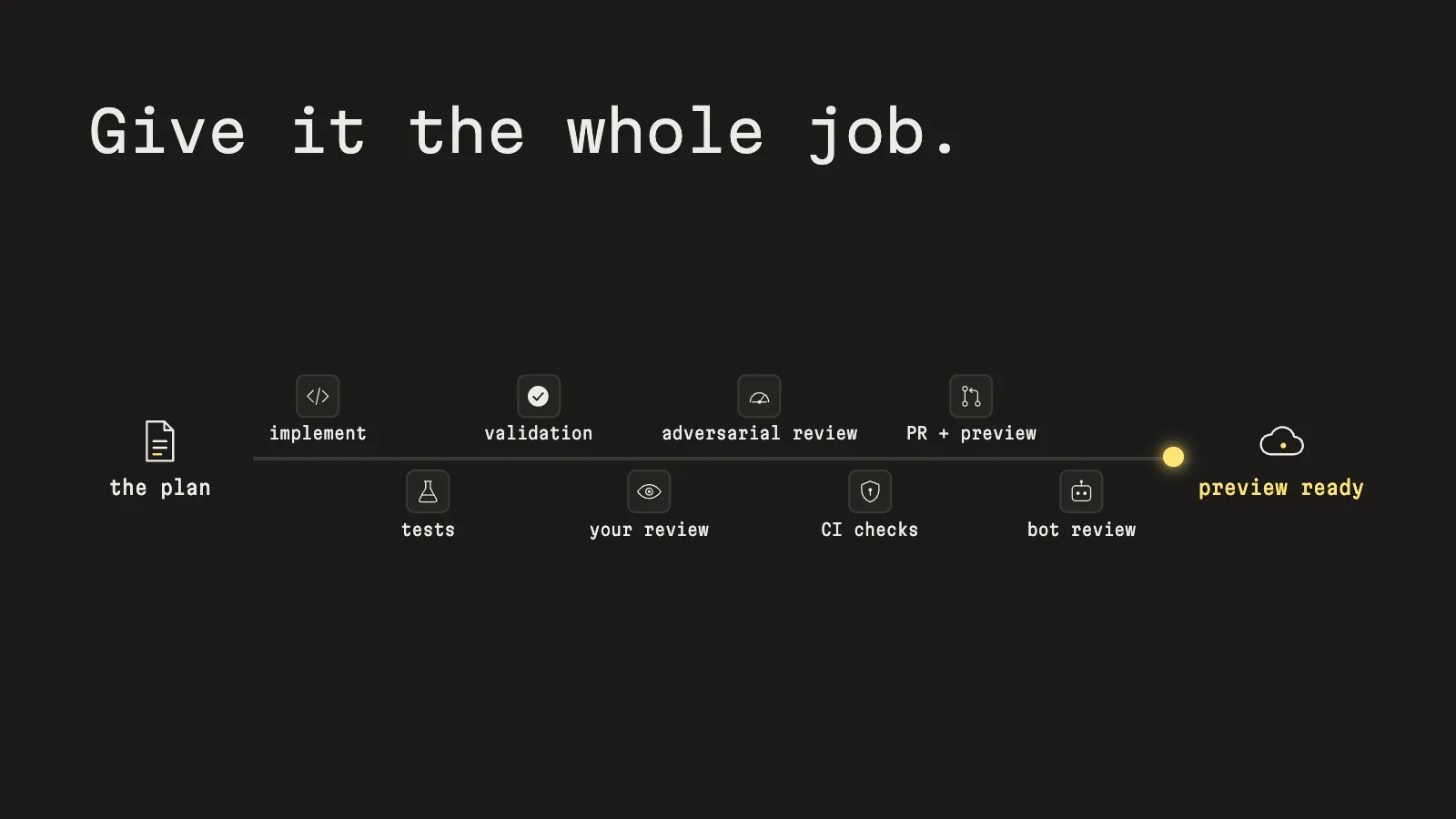
A rail from the plan through implement, tests, validation, adversarial review, CI checks, bot review and your review to preview ready.
Hand over the plan and ask for everything up to a preview you can review. The checks along the way make it safe to walk away.
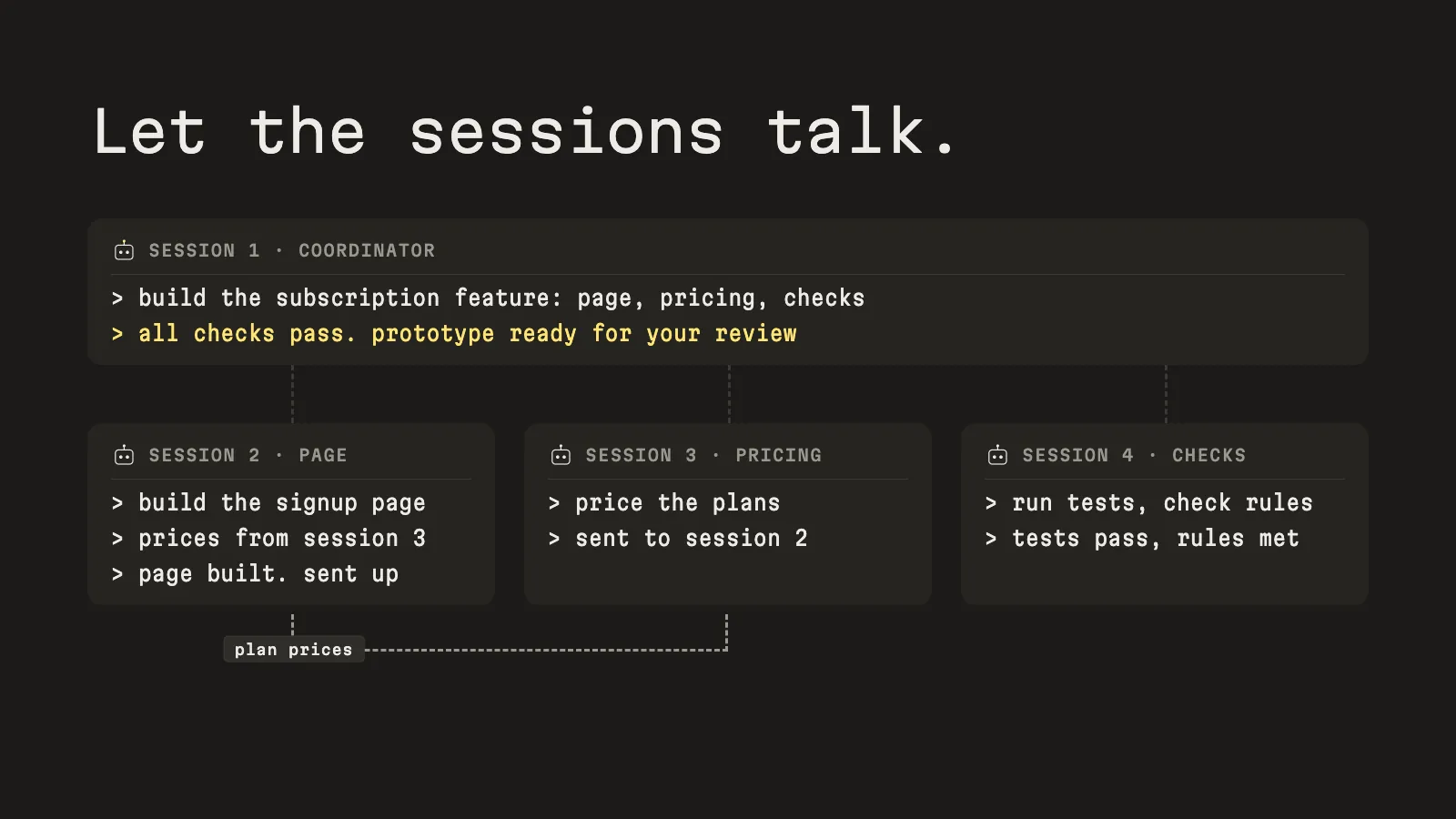
A coordinator session above three sessions for the page, pricing and checks, with prices passed from one session to another.
Split big work across sessions. One coordinates, and the rest pass work to each other directly.

Context

It knows what we tell it.

Chapter opener: Context, over an archival diagram.
Chapter two. The more it knows about our work, the better the work it gives back.
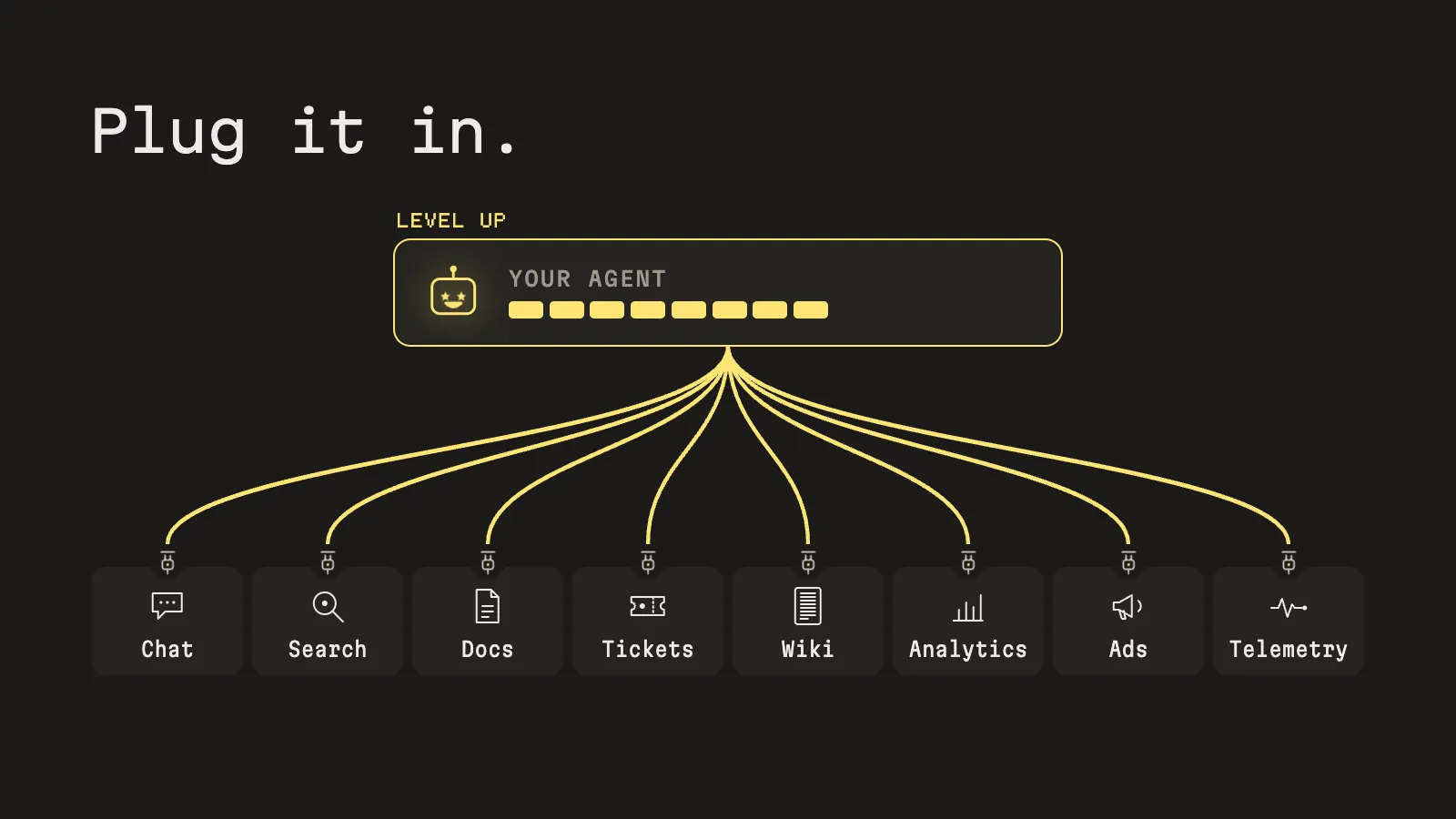
Your agent connected to chat, search, docs, tickets, wiki, analytics, ads and telemetry.
Connect the tools where the work lives, before the task that needs them.
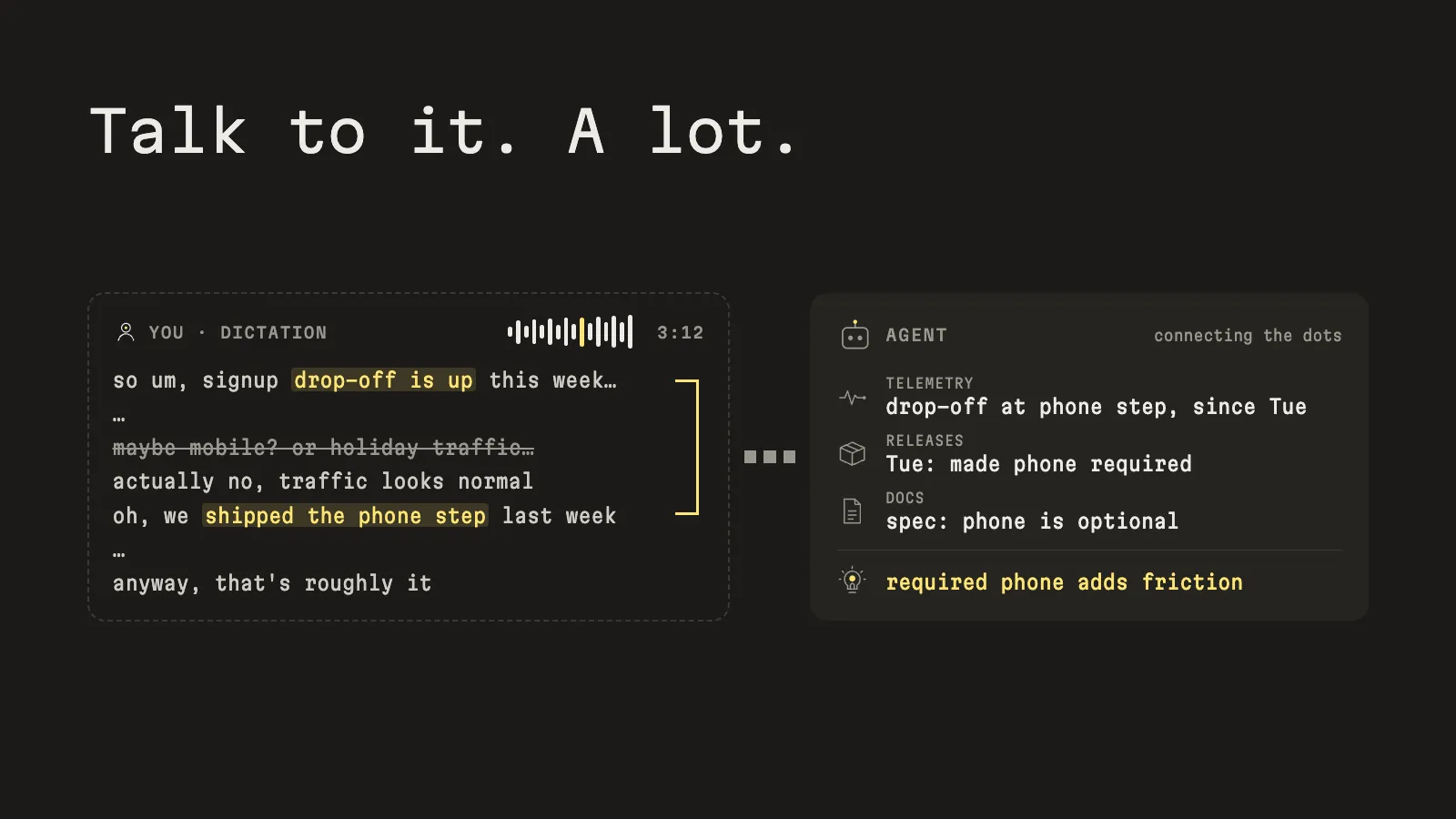
A rambling dictation about signup drop-off, and the agent picking out the phone step that shipped last week.
Hit dictation and ramble for a few minutes. The useful detail is often buried in the middle.
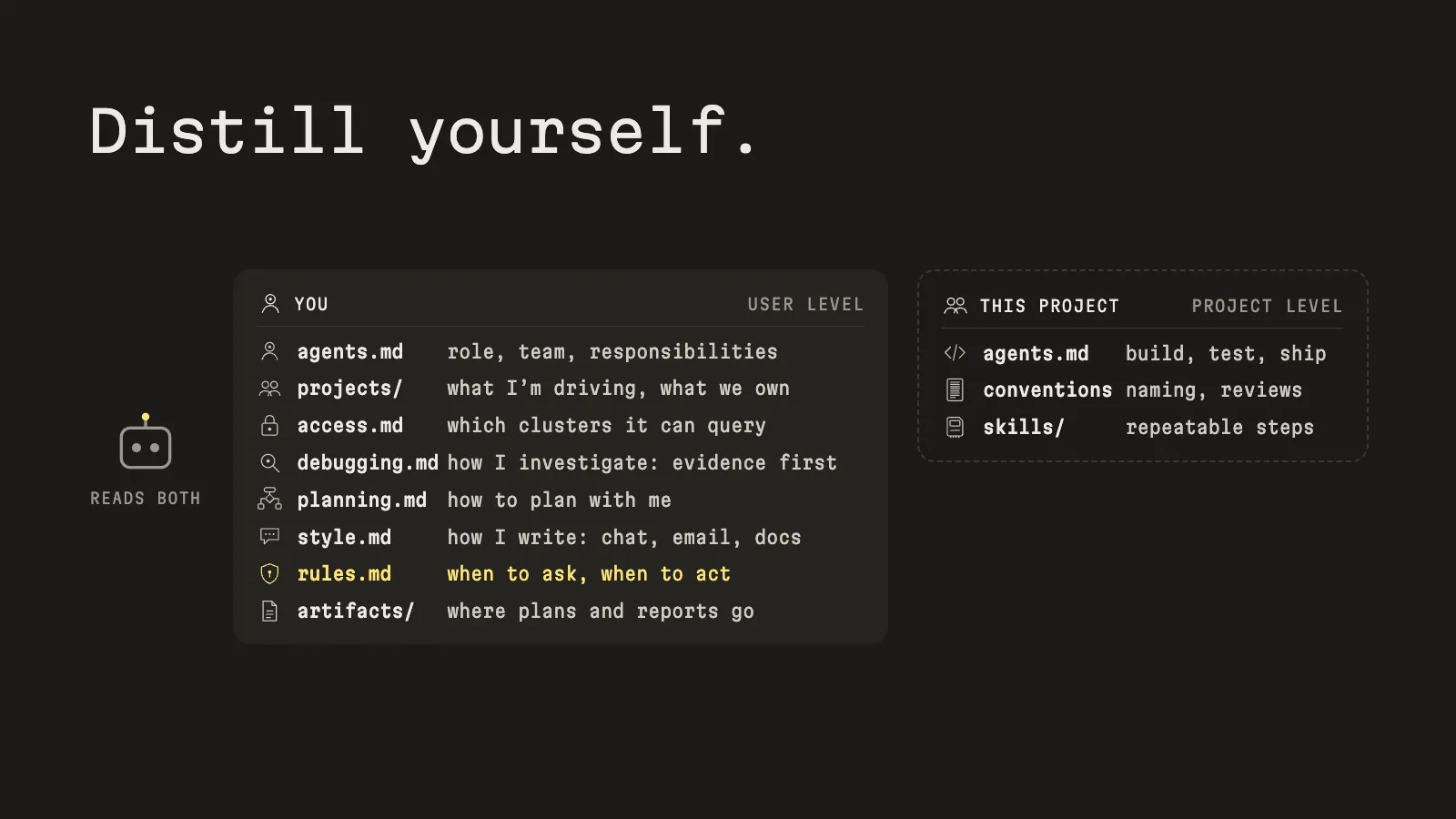
Instruction files at two levels: about you for every project, and about this project.
Write down who you are and how you work once, where the agent reads it every session.
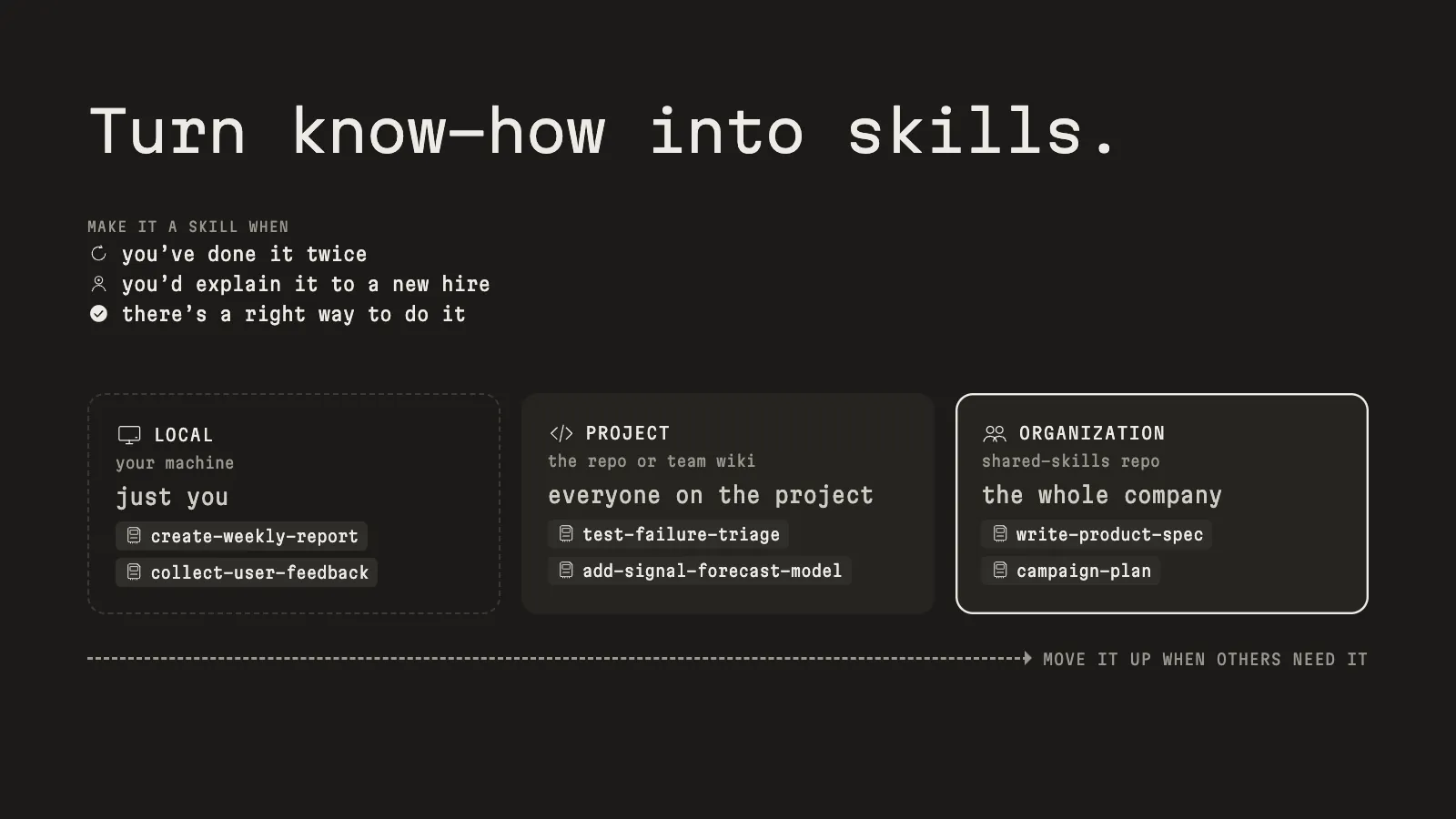
Skills at three levels: on your machine, in the project, and shared across the organization.
Keep agents.md short. Make it a skill when you’ve done it twice and there’s a right way to do it.

Guard

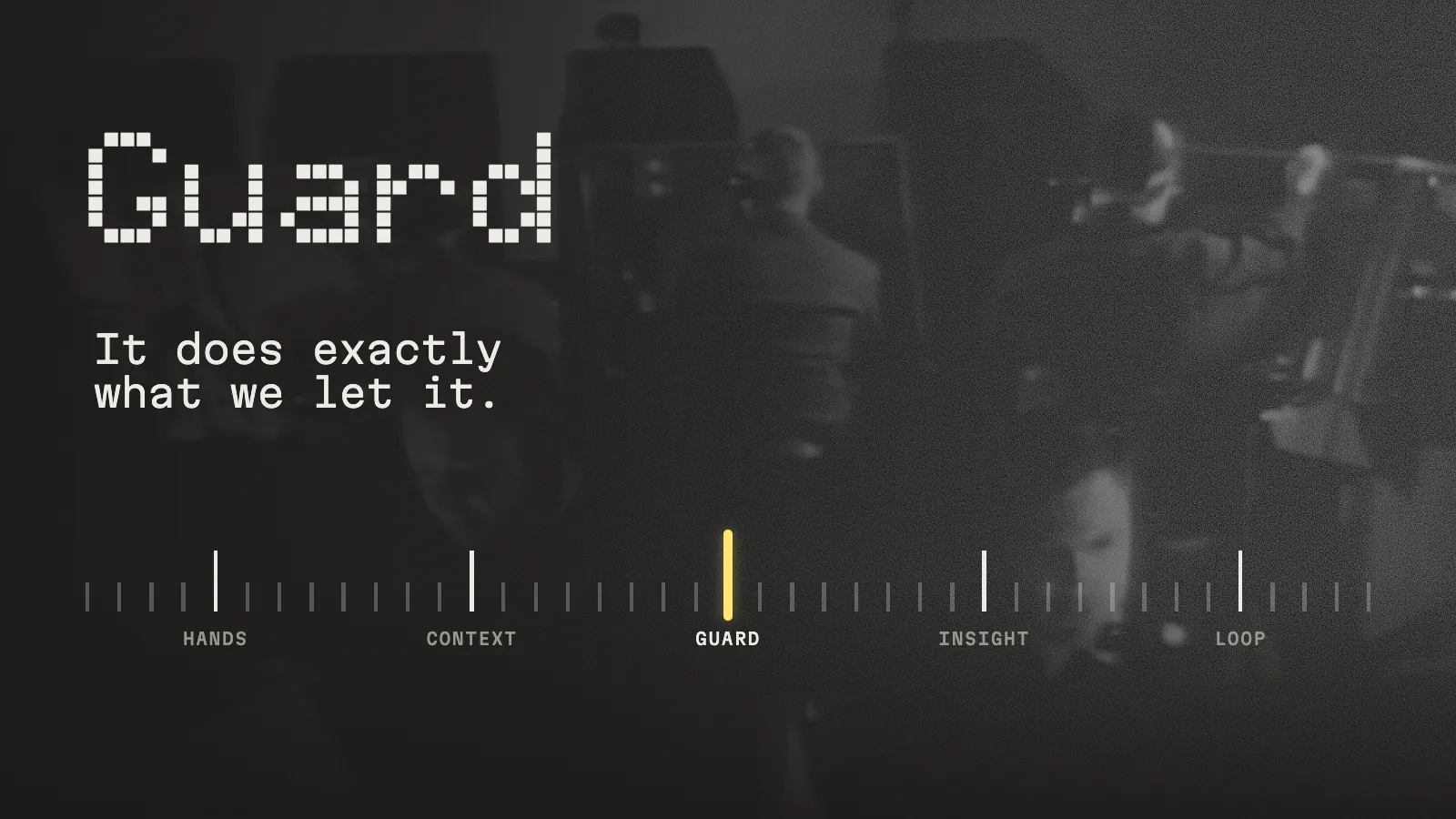
It does exactly what we let it.

Chapter opener: Guard, over archival footage of radar operators.
Chapter three. What we let it touch, what we install, and who we ask.
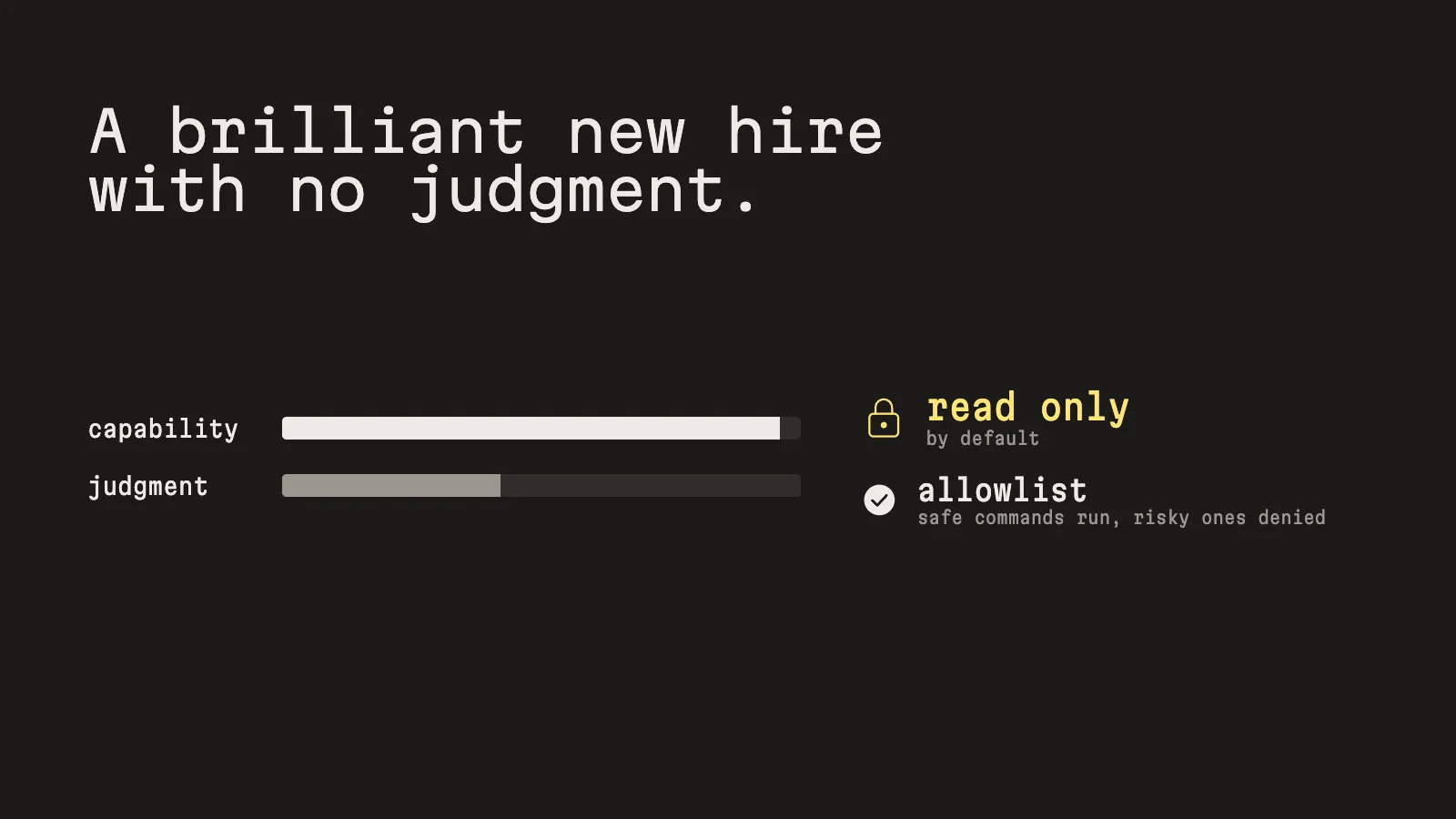
Capability bar nearly full, judgment bar short. Read only by default, with an allowlist for safe commands.
Start read only. Grant write access on purpose, for a task.
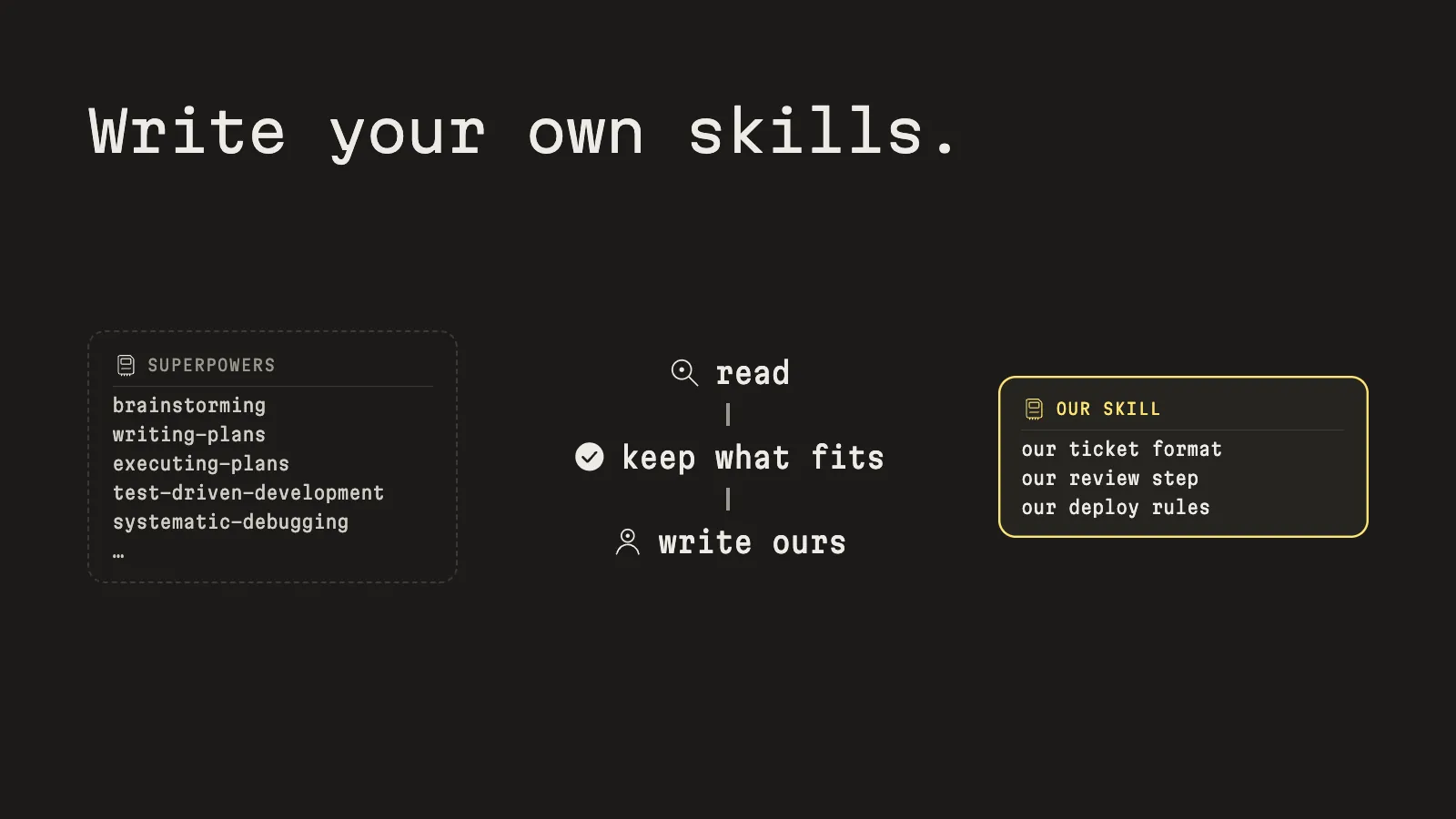
A public skill pack, read and filtered down to a skill with our own ticket format, review step and deploy rules.
Don’t install public skill packs as they are. Read them, keep what fits, write your own.
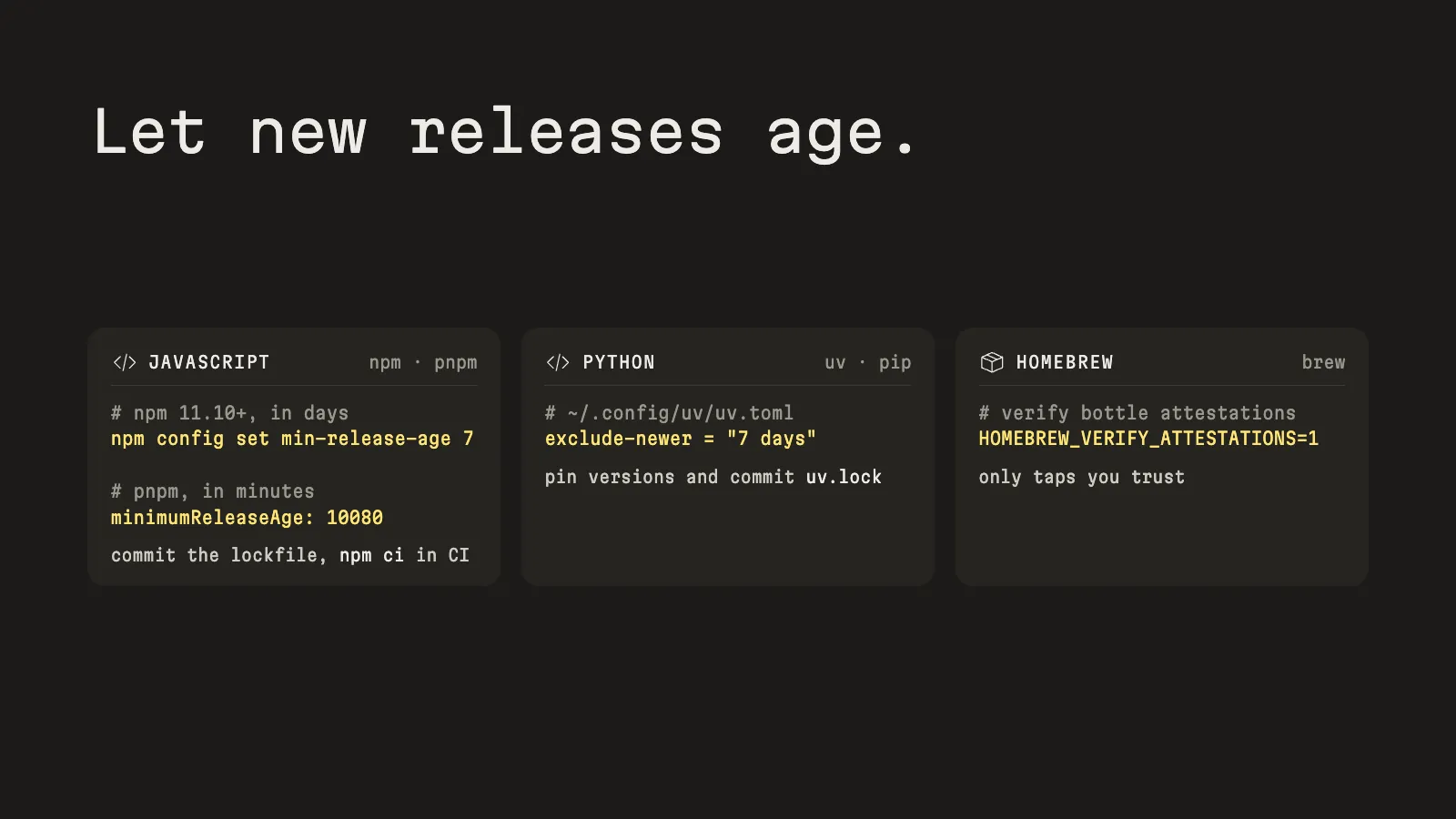
Settings for npm, uv and Homebrew that hold back brand new releases.
Tell your package managers to skip anything published in the last week.
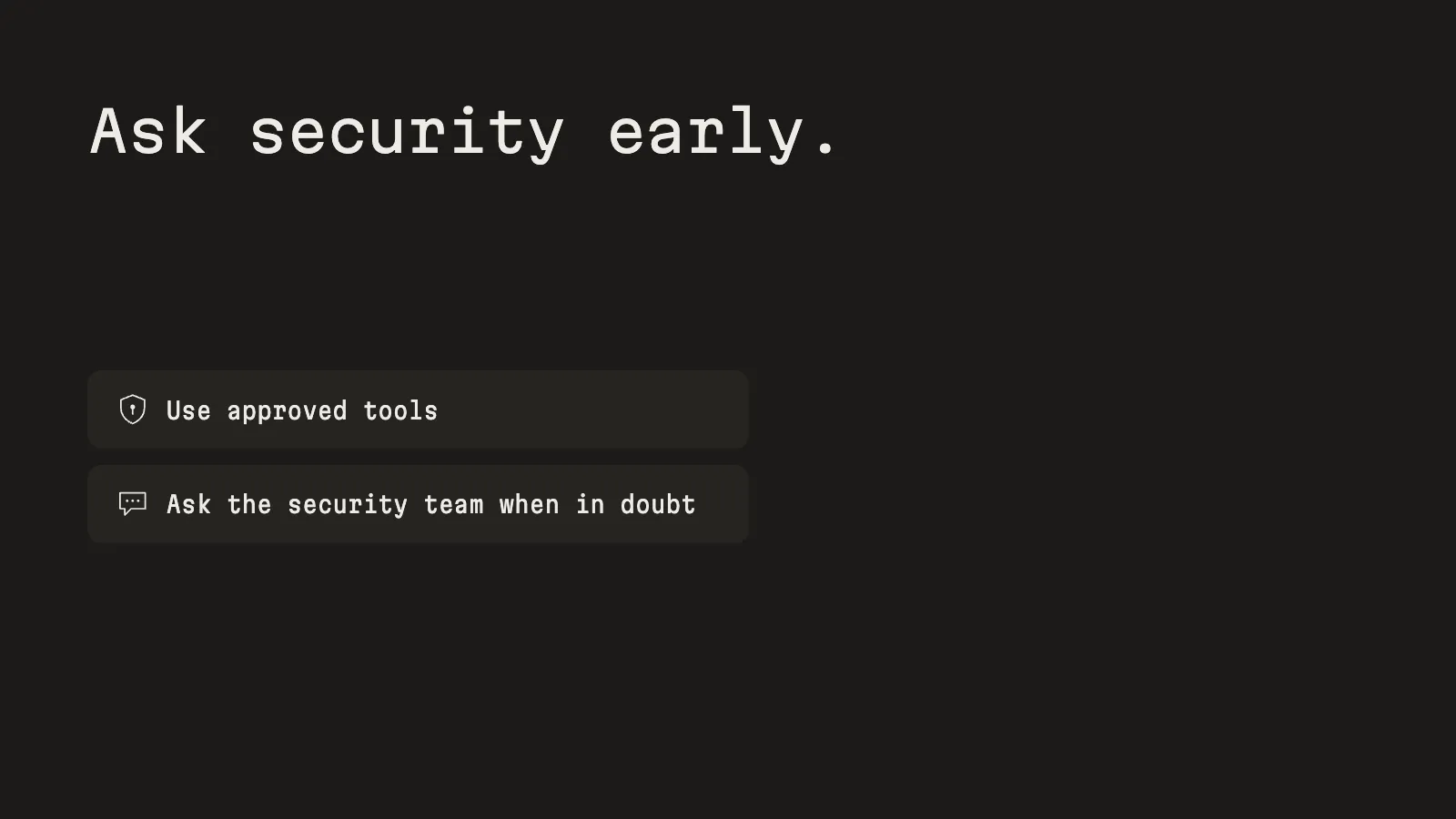
Two rules: use approved tools, and ask the security team when in doubt.
Use approved tools, and ask your security team when in doubt.

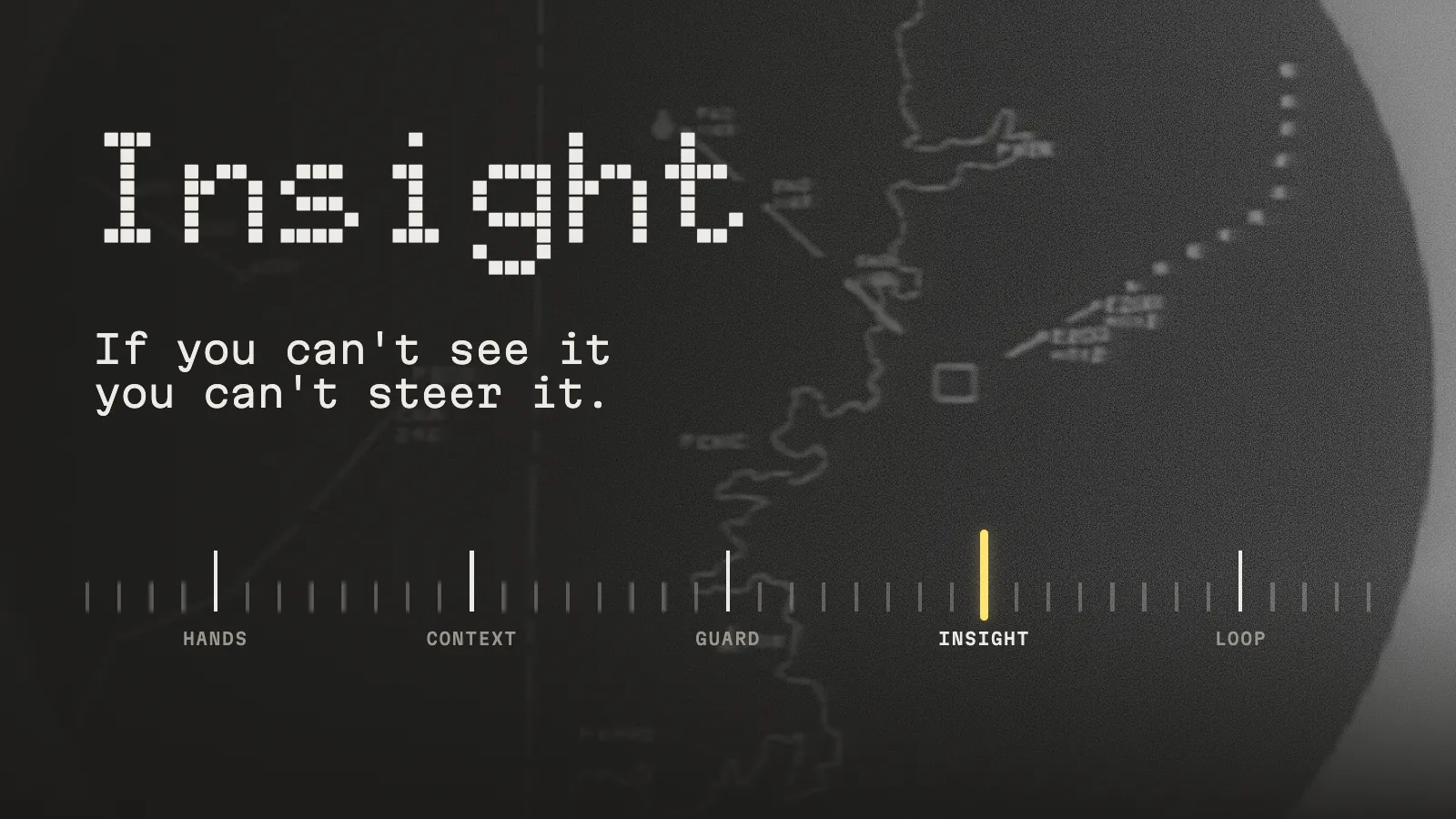
Insight

If you can’t see it, you can’t steer it.

Chapter opener: Insight, over an archival radar plot.
Chapter four. When an agent does a whole job in one turn, make the work easy to look at.
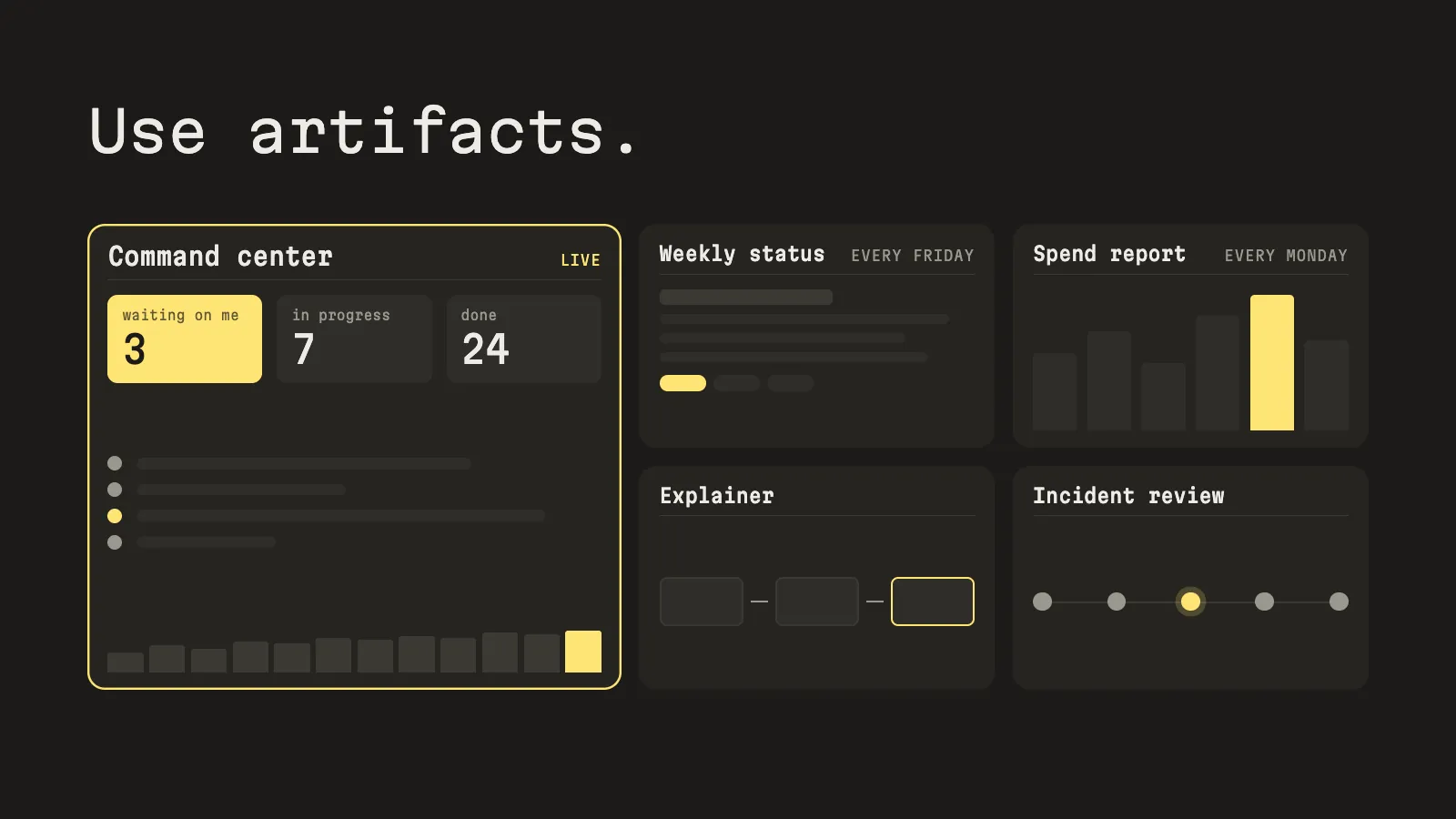
A command center showing what is waiting on me, beside a weekly status page, a spend report, an explainer and an incident review.
When the answer matters, ask for a page you can open and share, not a wall of text in chat.
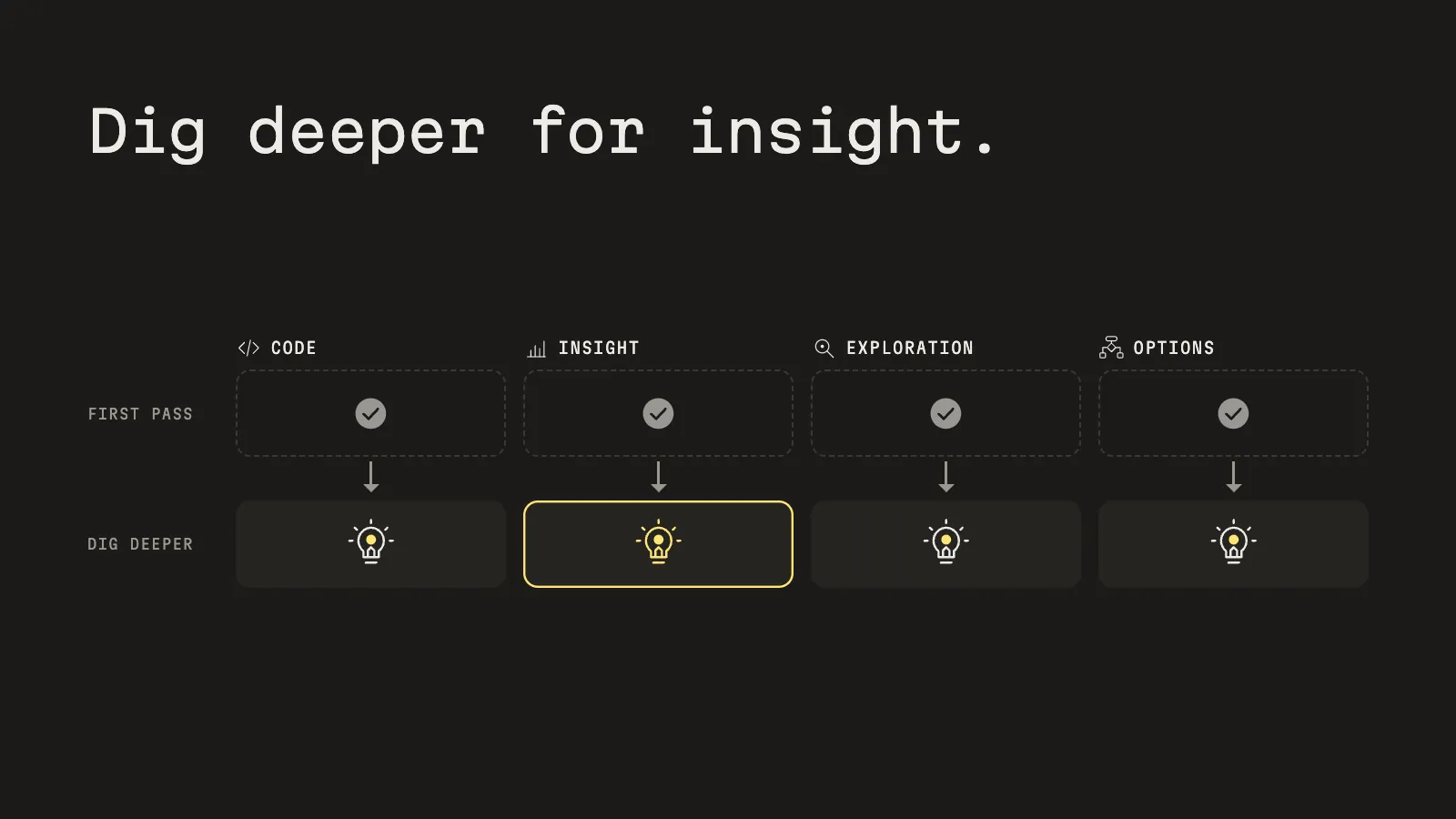
First pass and dig deeper, across code, insight, exploration and options.
The first answer is rarely the interesting one. Ask what’s missing.
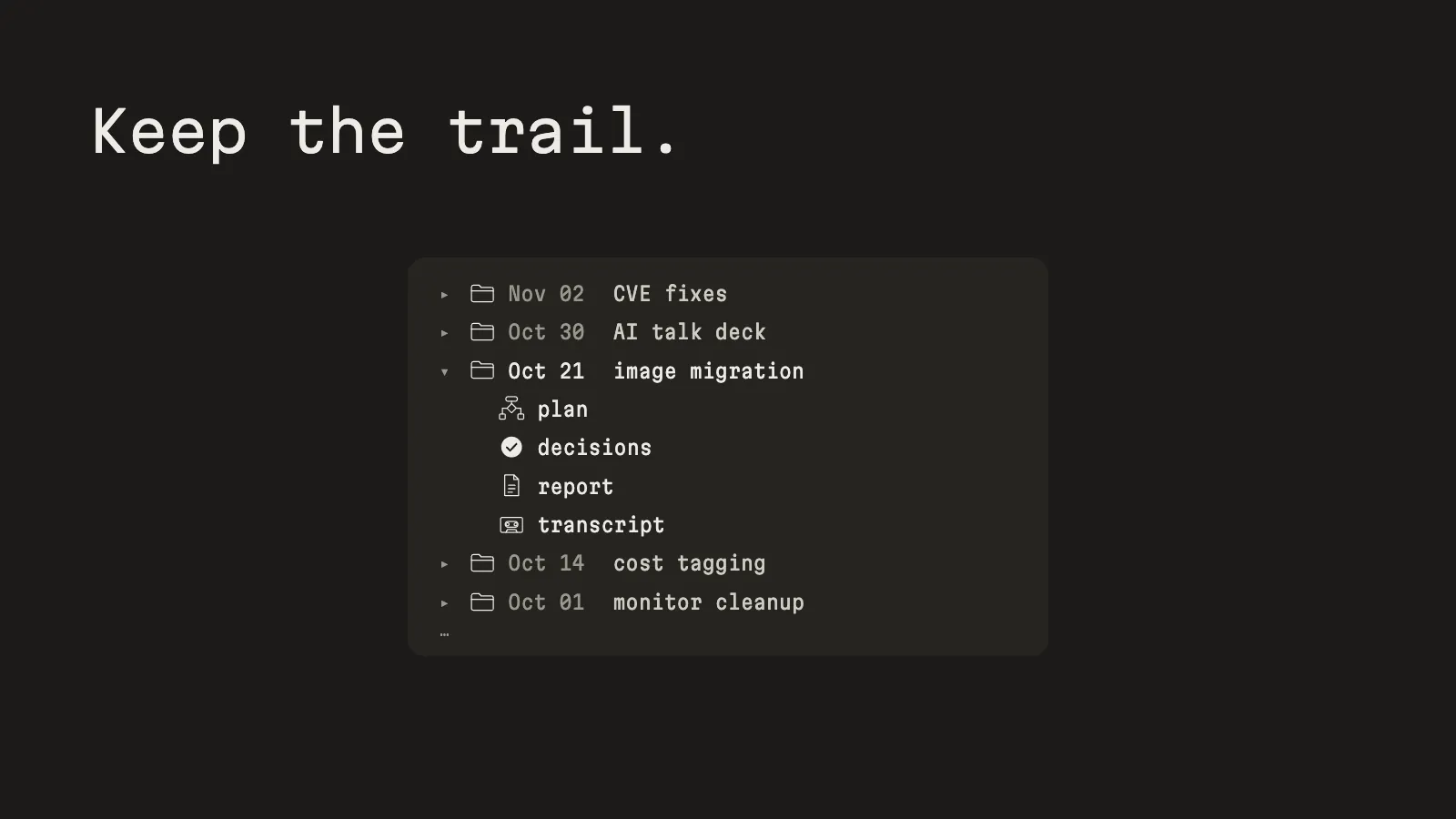
A folder tree of tasks by date, one open to show its plan, decisions, report and transcript.
Keep one folder per task, with the plan, the decisions, the report and the transcript.

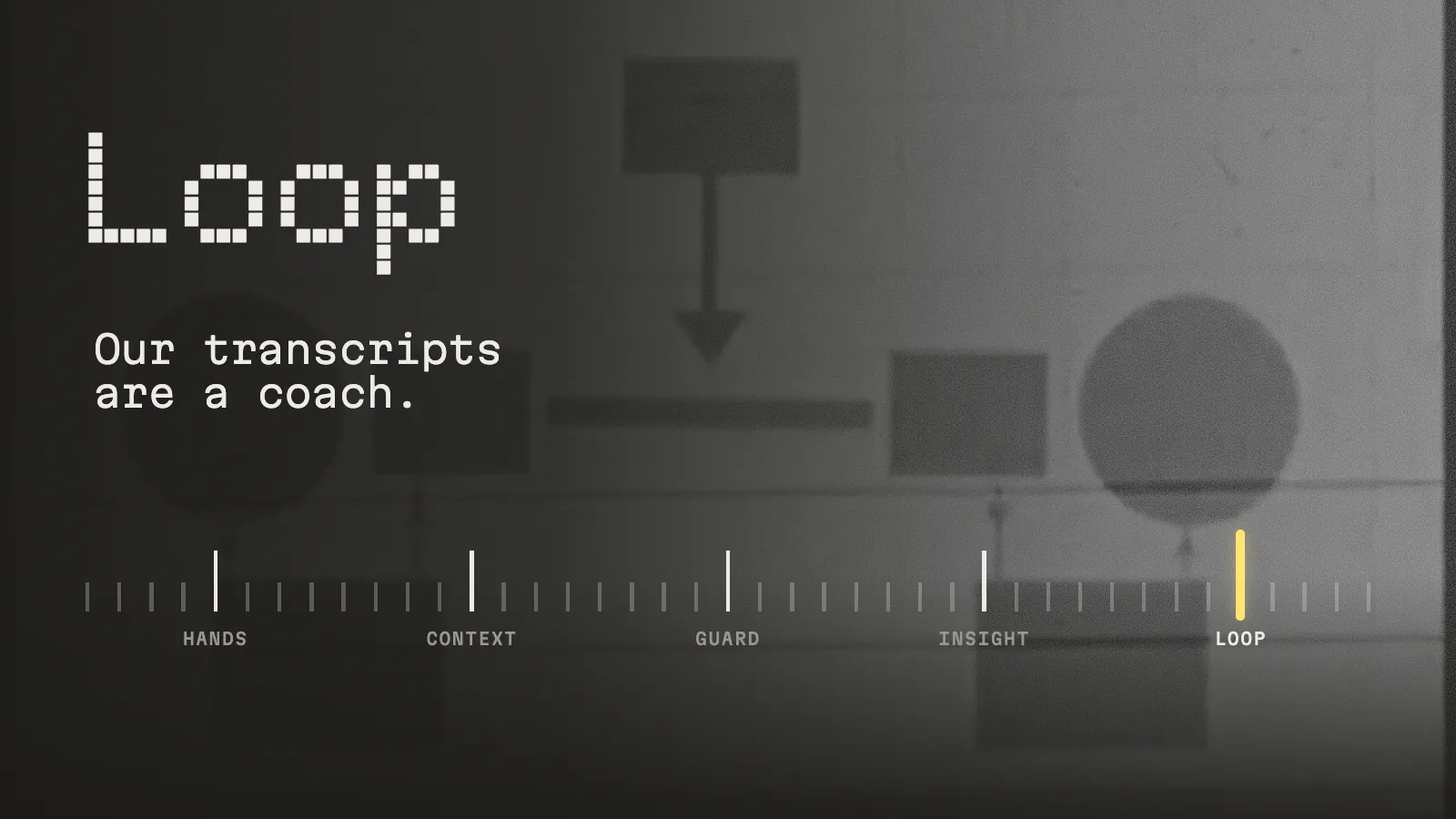
Loop

Our transcripts are a coach.

Chapter opener: Loop, over an archival communications diagram.
Chapter five. Every session leaves a record, and it’s the best coach we have.
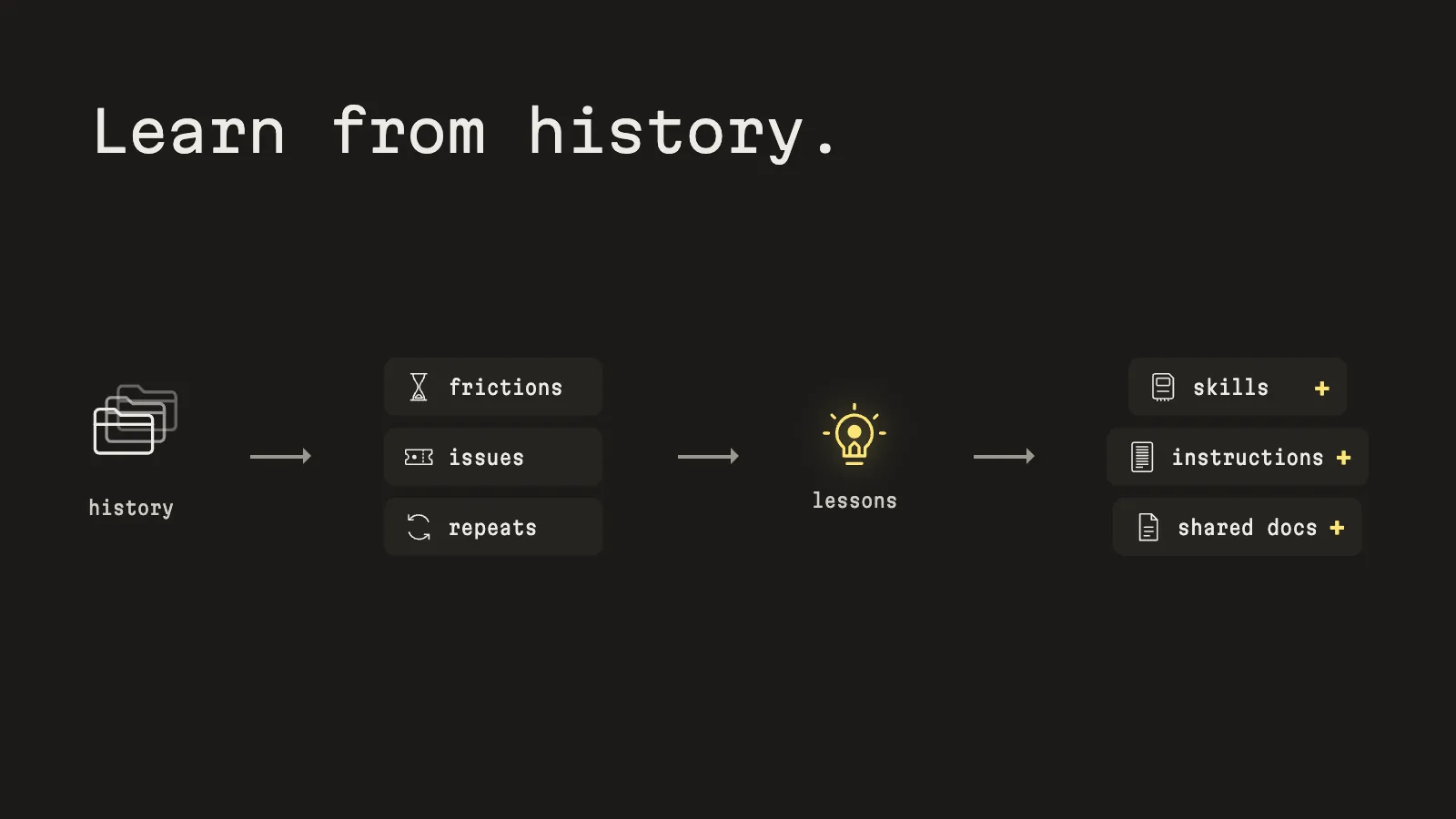
History feeds frictions, issues and repeats into lessons, which become skills, instructions and shared docs.
Once a week, have a small model read the trail for frictions, issues and repeats.
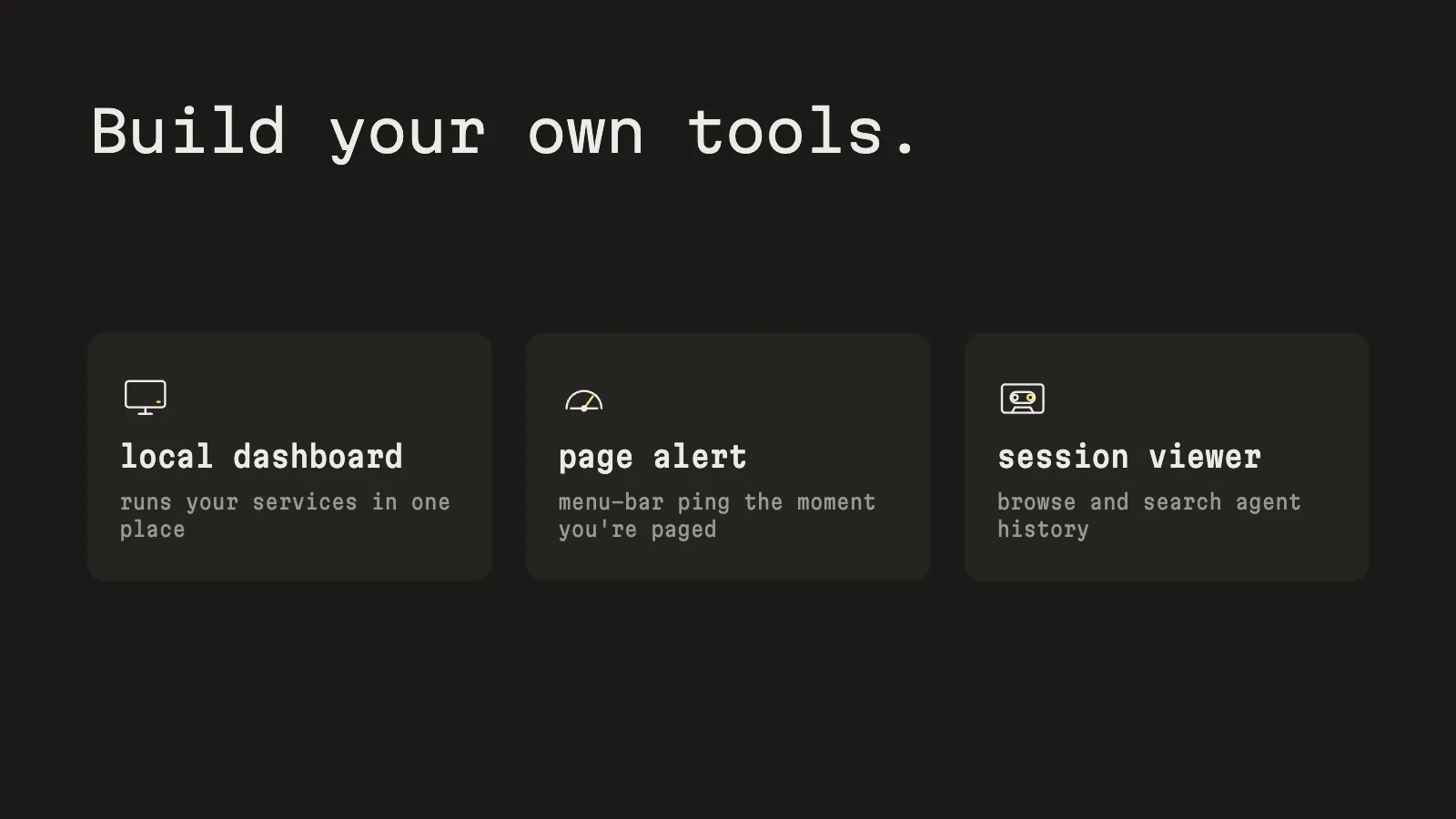
Three small tools: a local dashboard, a page alert and a session viewer.
Sometimes the fix is a small tool the agent can build in an afternoon.
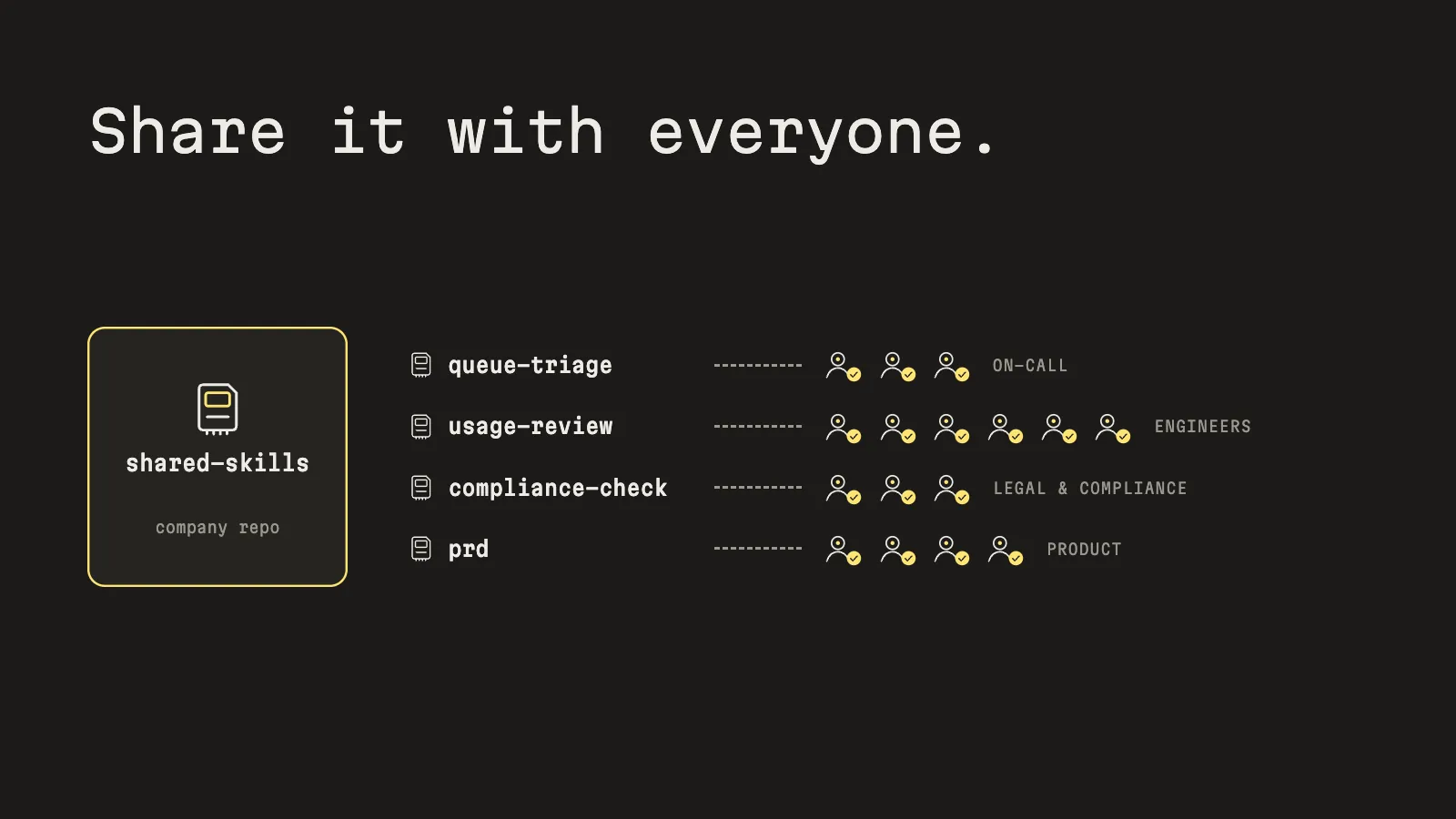
A shared skills repo whose skills reach on-call, engineers, legal and compliance, and product.
Fix it where it lives. A line in a shared skill helps every session after it.
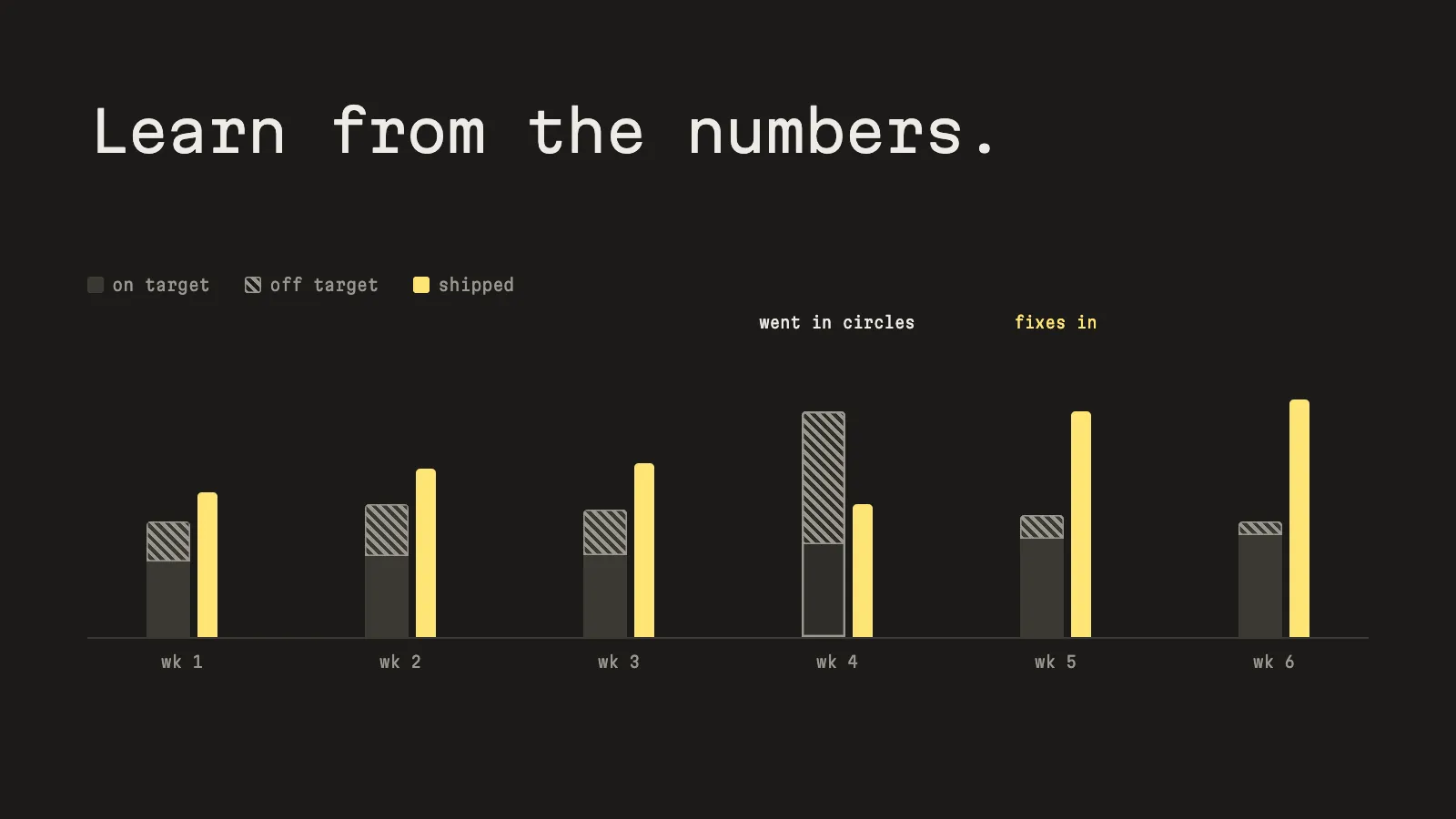
Weekly bars of spend and fixes. In week four spend nearly doubles, mostly off target, with nothing extra shipped.
Check where the spend went, and how much of it was off target.
Measure outcomes.
Usage isn’t the goal. Shipped work and fewer redos are.

Before you go

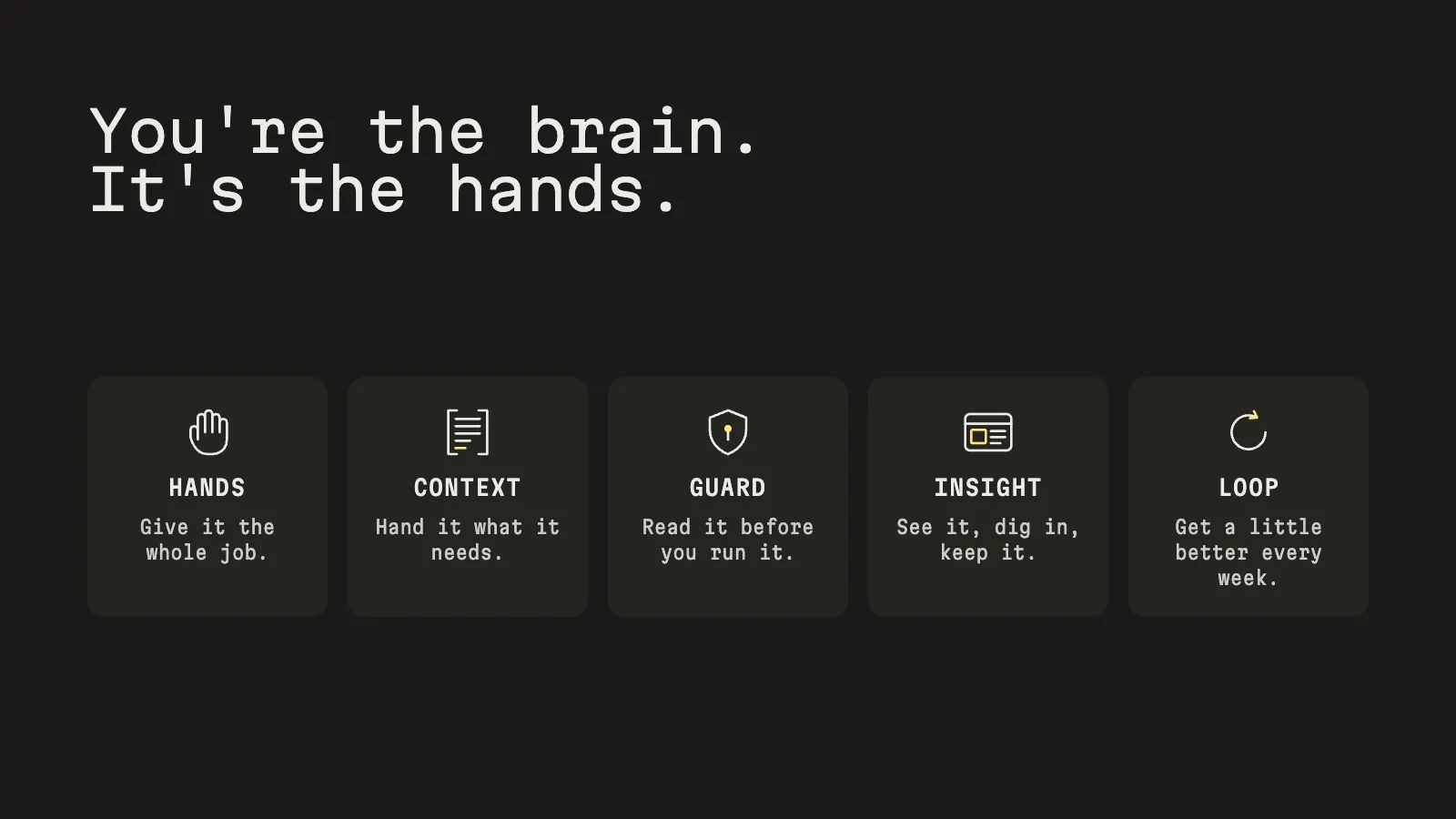
Recap: Hands, give it the whole job. Context, hand it what it needs. Guard, read it before you run it. Insight, see it, dig in, keep it. Loop, get a little better every week.
What we’re learning, summarized.
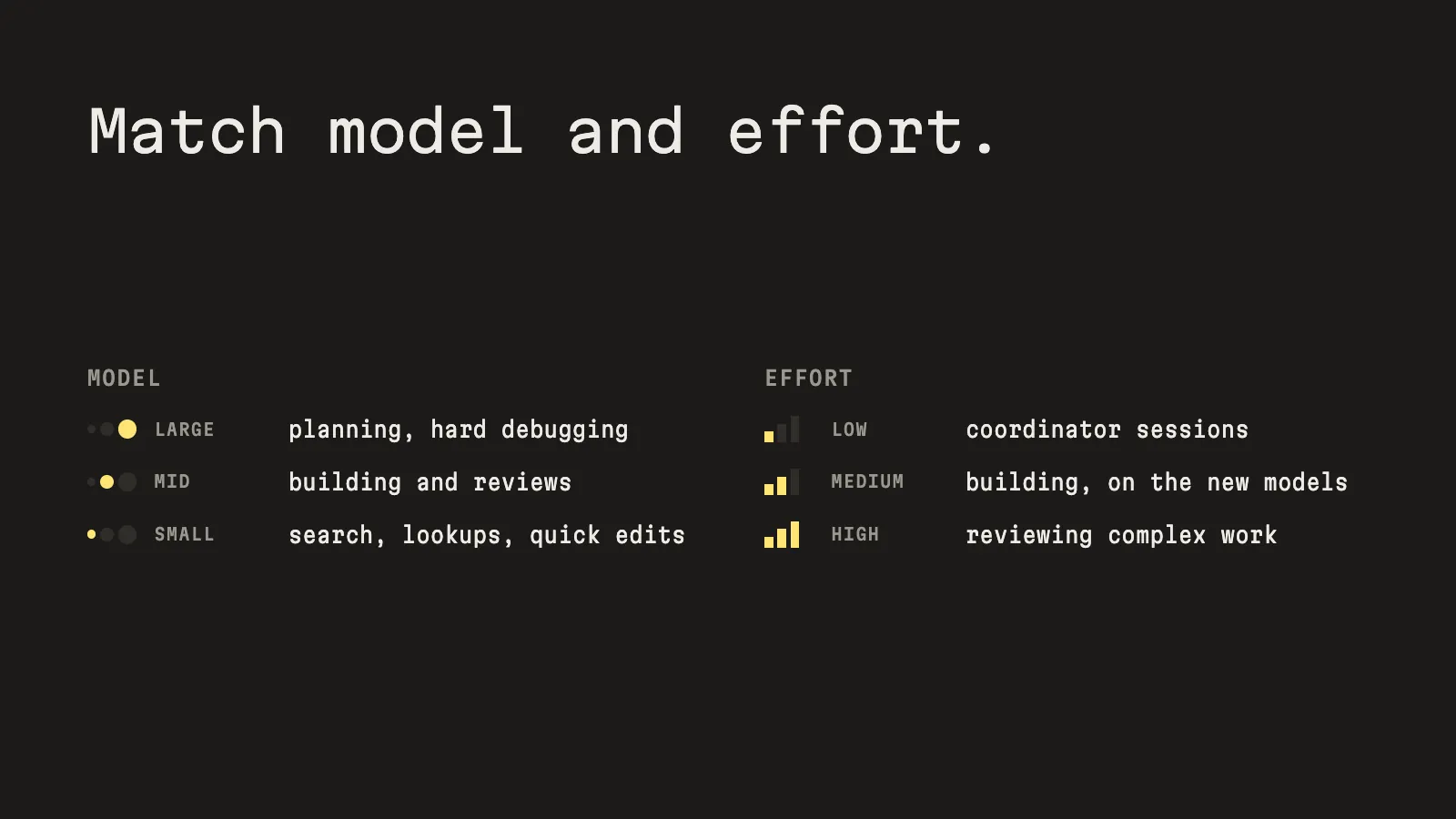
A table matching model size and effort level to the kind of work.
Big model for planning and hard debugging, mid-size for building, small for lookups.
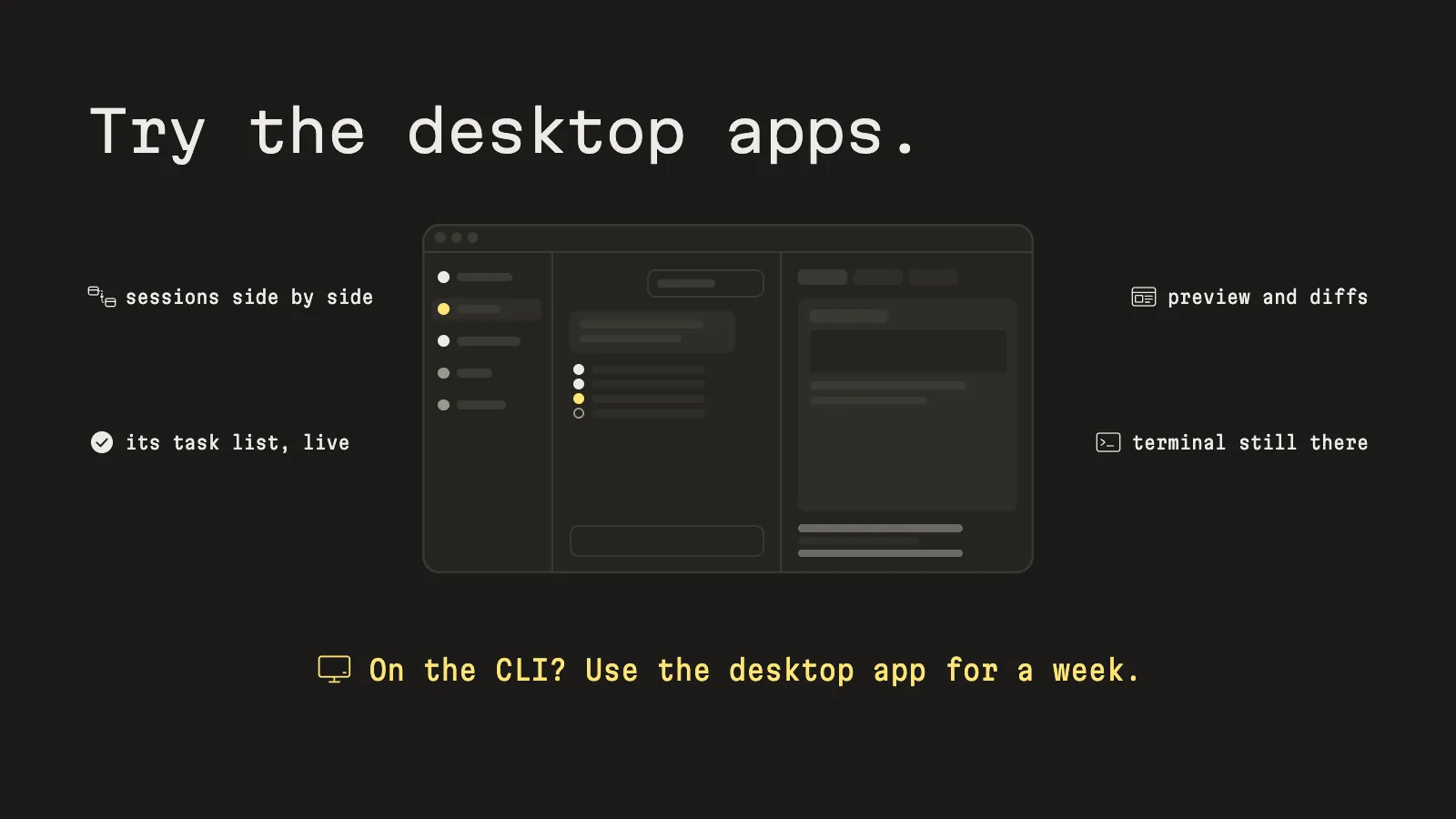
A desktop app with sessions side by side, a live task list, previews and diffs, and the terminal still there.
Live in the terminal? Try the desktop apps for a week.
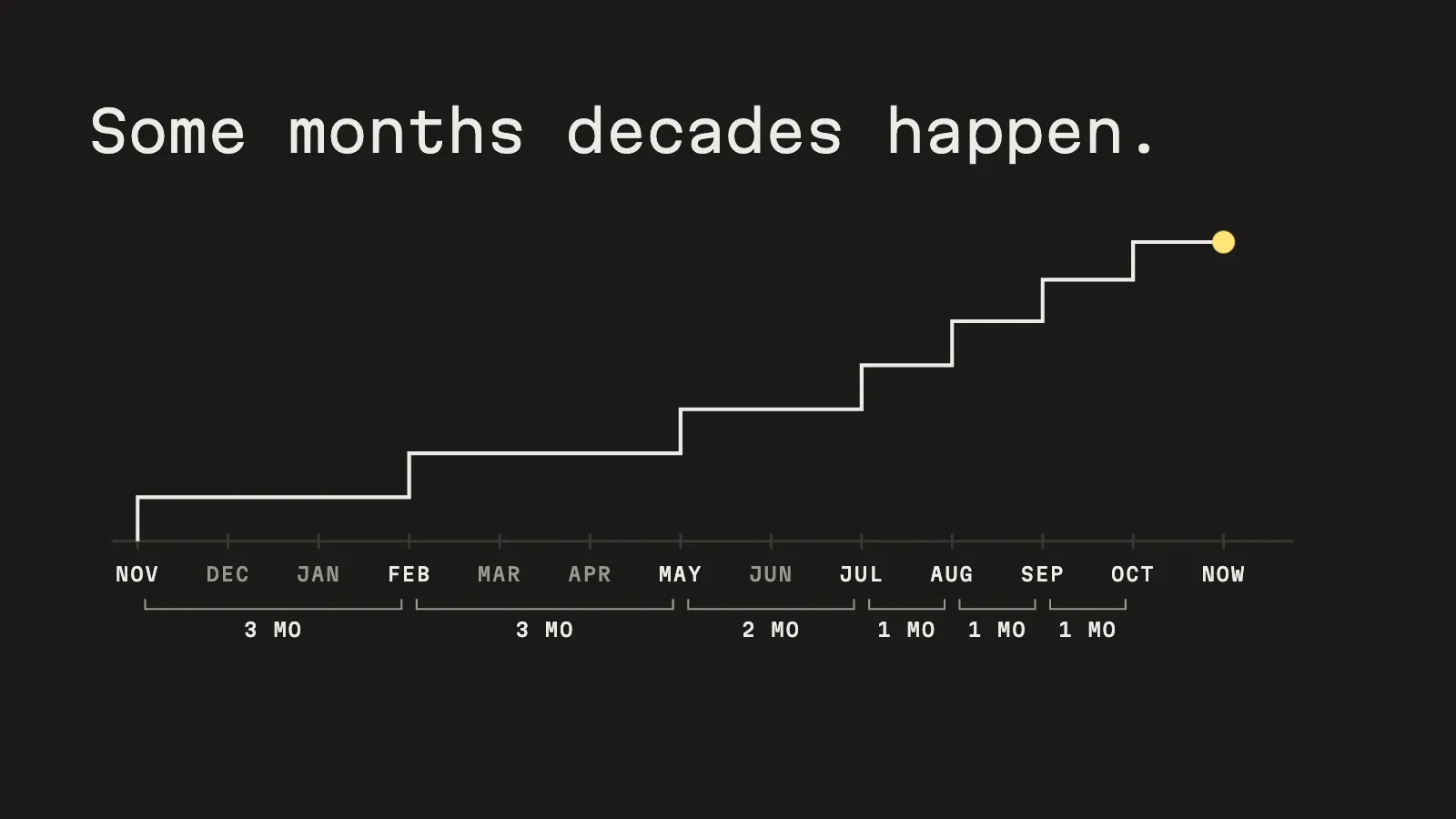
A staircase of model jumps from November 2025 to now, with gaps shrinking from three months to one.
The jumps keep coming, and the gaps between them keep shrinking.
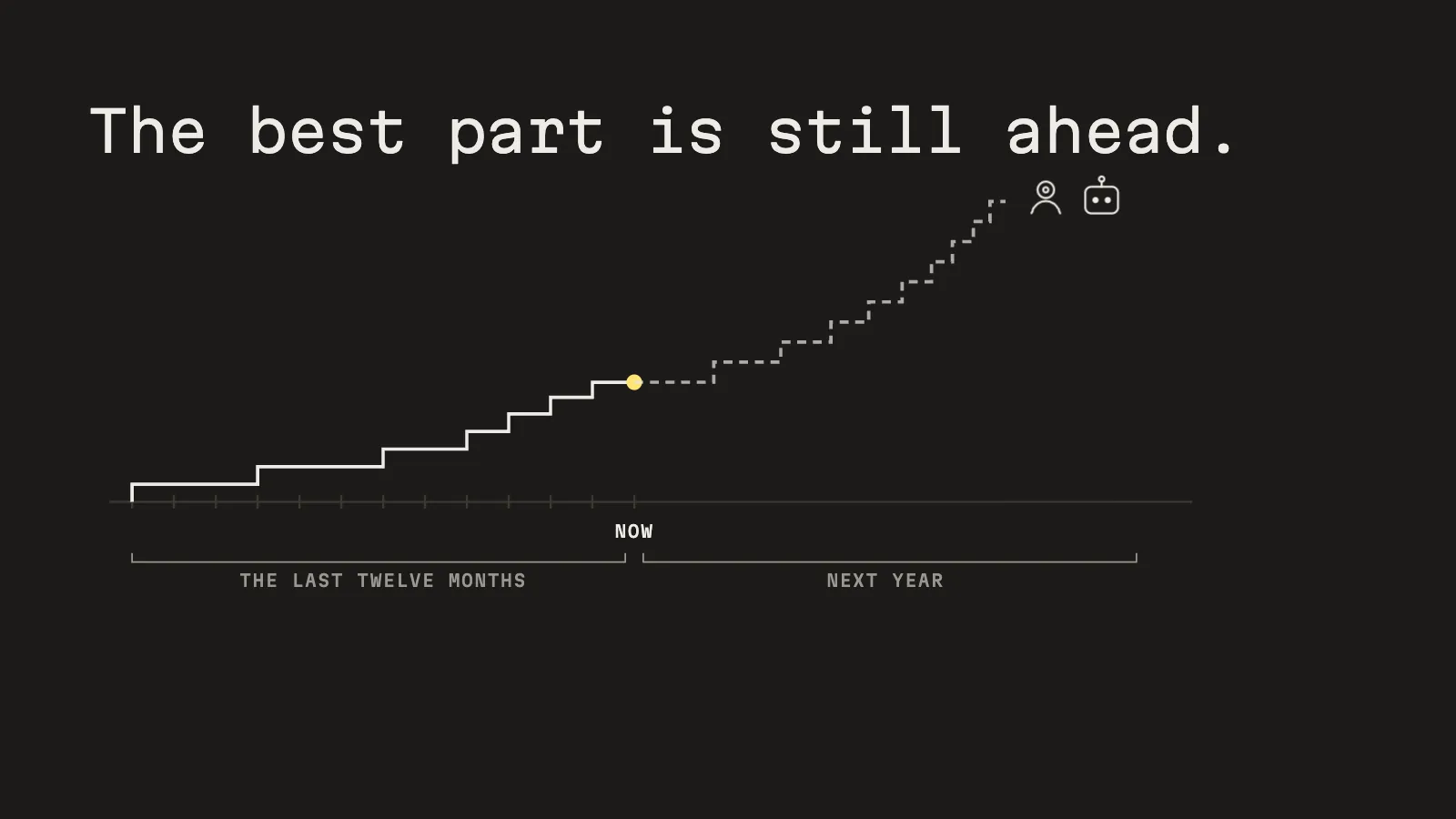
The last twelve months squeezed to the left, with a steeper staircase for next year ending in a person and an agent.
The next twelve months will move faster. This is the slowest it will ever be.
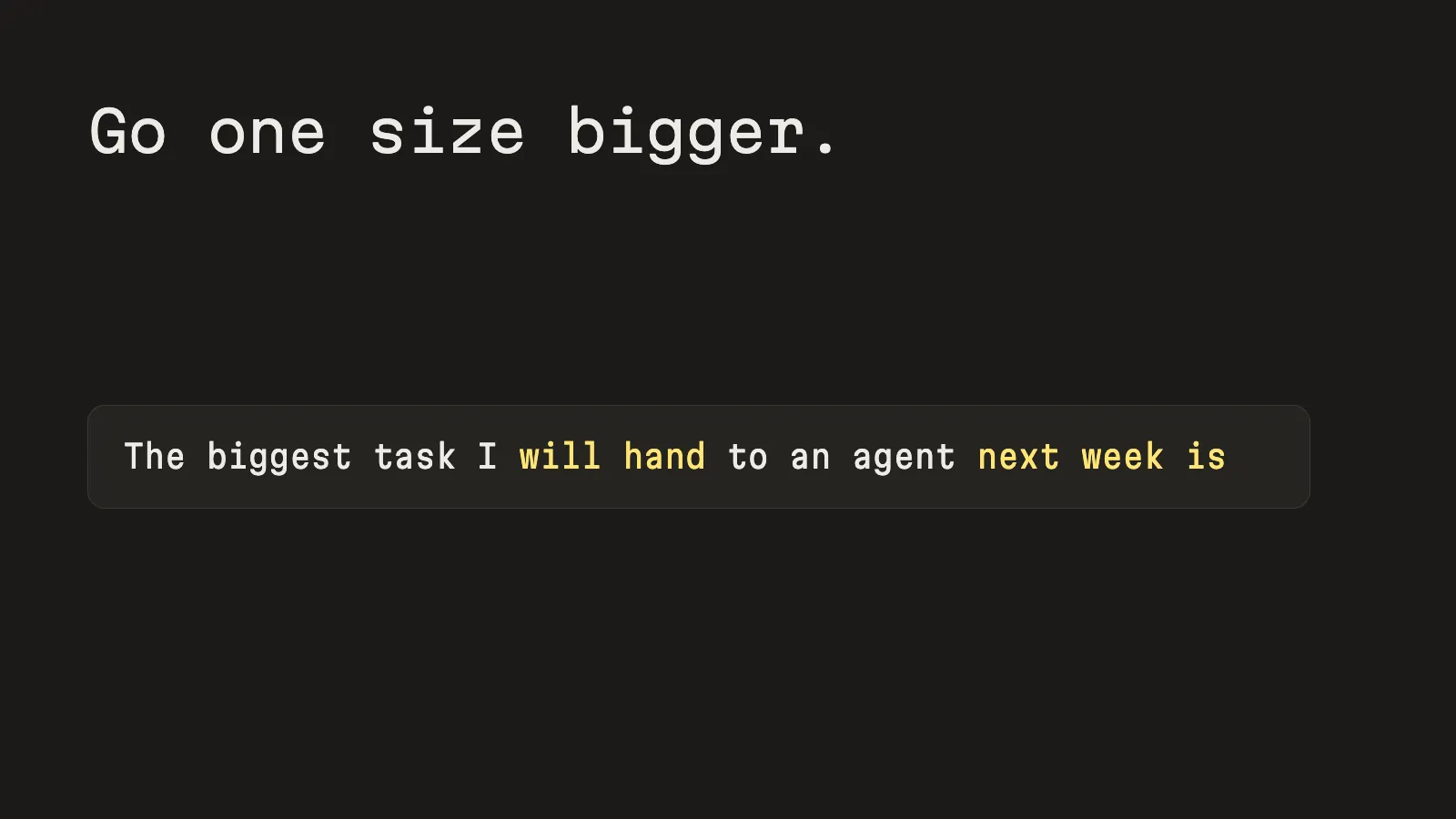
A chat box: the biggest task I will hand to an agent next week is.
Take that task from the start and hand over the whole job around it. Then read the transcript back.
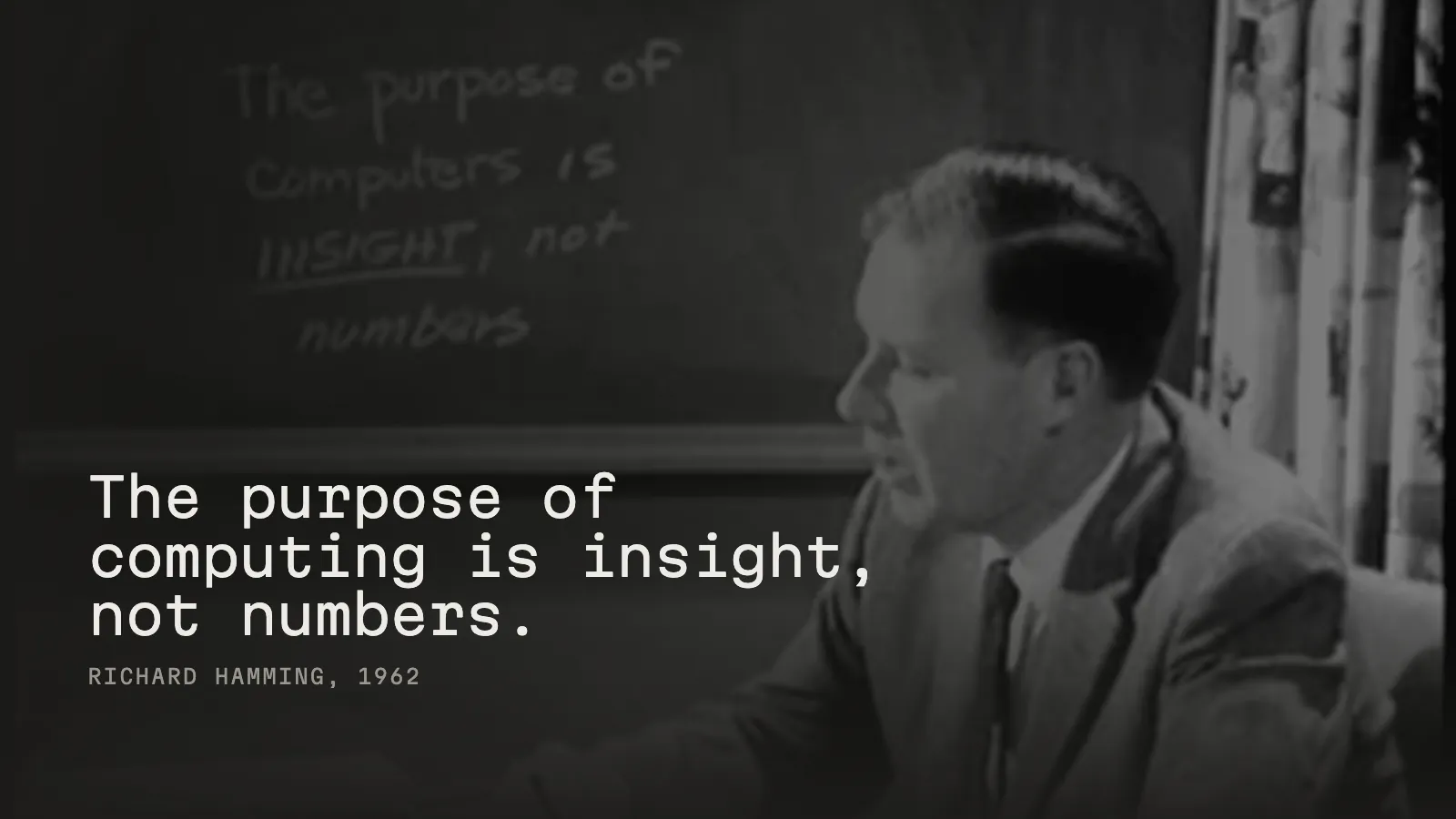
Richard Hamming, 1962: the purpose of computing is insight, not numbers.
Thanks for reading.
Archival footage from the Prelinger Archives via the Internet Archive, all public domain: Hands (U.S. Army Signal Corps, c. 1944), The Information Machine (Charles and Ray Eames for IBM, 1958), On Guard! The Story of SAGE (IBM, c. 1956), A Communications Primer (Charles and Ray Eames, 1953) and Logic by Machine (c. 1960s). Title photo: Grace Hopper at the UNIVAC, Smithsonian Institution (CC0). Icons adapted from Lucide (ISC License, © Lucide Contributors).

Ink tailpiece: Vignesh, his wife, and Chocolata standing together on a single brush stroke, a faint sunset on the water behind them.

←→ MoveEsc Close